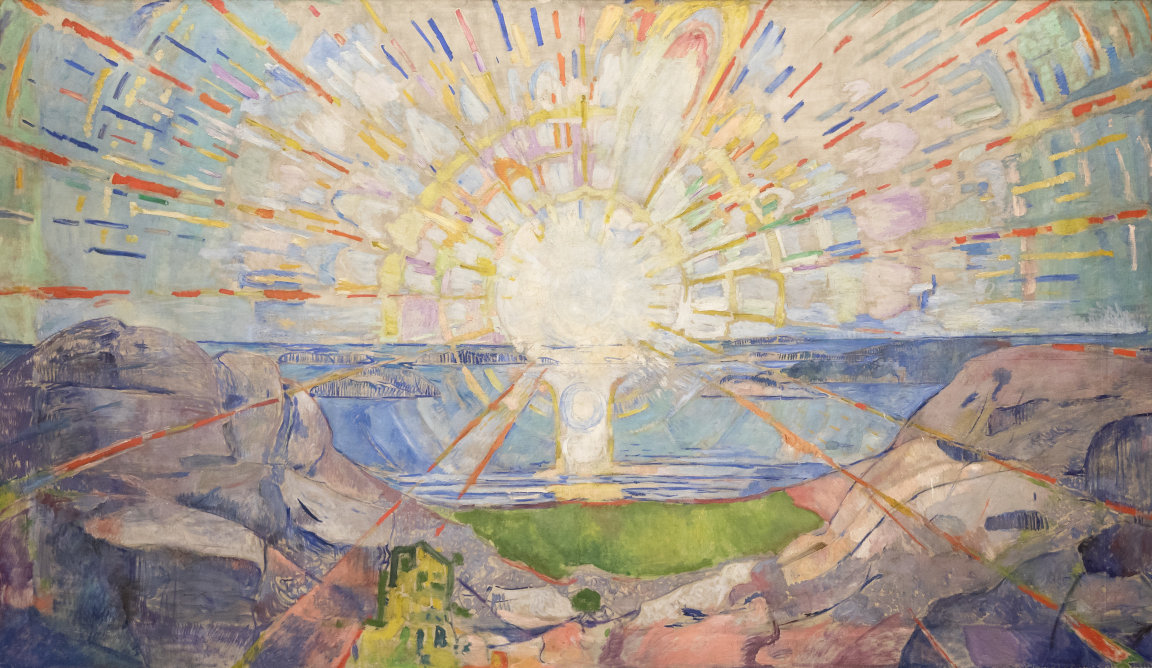
There was a blogger I used to read who said that “the only reason people write things on the Internet is because they want other people to read them.” This statement struck me as so mind-bogglingly silly that I stopped reading them. I don’t write for you, Internet, I write for myself; if anybody but me wants to read it, that’s entirely incidental. (You will notice there is no comment section, so I can’t receive feedback!) Still, if you do, I hope you find something interesting among what I have been thinking about this year.
I think the Egyptians had it right: the best place to hide things is in plain sight.
“Different goals for different souls.”
εἰς δὲ τέλος
And finally into μάντεις
prophets τε καὶ
and ὑμνόπολοι
poets καὶ
and ἰητροί
healers
καὶ
and πρόμοι
champions ἀνθρώποισιν
to humankind ἐπιχθονίοισι
on the earth πέλονται·
they become,
ἔνθεν
thence ἀναβλαστοῦσι
to sprout up as θεοὶ
gods, τιμῇσι φέριστοι.
honored above all.
(Empedokles, fr. 146.)
You know, I don’t think it occurred to me before that lord Apollon rules each of prophets, poets, healers, and champions...
The Nile runs from Lake Victoria in the south to the Mediterranean Sea in the north. Adorably, the Egyptian hieroglyph for 𓊛 “to go north” is a boat with it’s sail furled, since the current alone is sufficient to carry it downstream, while the hieroglyph for 𓊝 “to go south” is a boat with it’s sail set, since one needs the wind to carry it upstream against the current.
But this is even more elegant when one considers that the Osiris myth uses the Nile as something of the world-axis: the south is towards the Sun, towards the light, towards the spiritual world, while the north is away from the Sun, away from the light, away from the spiritual world. (This is why Horos was born in the north at Buto, in the material world, and each successive battle with Seth extended his dominion further and further south into the spiritual world.) These hieroglyphs therefore suggest it’s easy to let the current carry you downstream towards the material; but if you want to go upstream, towards the spiritual, it takes work.
Herodotos (Histories I §46–91, with many digressions) tells the amusing story that king Kroisos of Ludia (modern Turkey) was becoming concerned about the growing power of Persia (modern Iran) and thought to do something about it before they were too powerful. He sent envoys to each of the most prestigious oracles of the time: of Apollon at Delphi, Apollon at Abai, Zeus at Dodona, Amphiaraos at Thebai, Trophonios at Lebadeia, the Brankhidai at Diduma, and Zeus-Amun at Siwa. He asked his envoys to, on the hundredth day from leaving Ludia, inquire of the oracles what he was doing at that very moment. Five of the oracles simply failed the test (though it is not clear whether they were incorrect, refused to answer, or what). Amphiaraos was vaguely correct and was given a modest gift as a reward. But the Puthia shocked Kroisos by answering—before she was even asked the question!—that she smelled a tortoise and a lamb being stewed together in a bronze pot with a bronze lid, which was, in fact, exactly what the king was doing. He was so impressed that he sent such ludicrously vast gifts of gold and silver that they were still the glory of Delphi some seven hundred years later, and he bid his envoys inquire a second time of the Puthia, asking what would happen if he sent an army against the Persians. She answered that, if he should do so, a mighty empire would fall. Kroisos, emboldened by the oracle, attacked Persia. They defeated his army, so he retreated to Sardis to lick his wounds and send for reinforcements; but the Persians besieged the city, took him prisoner, and conquered Ludia, thereby proving the oracle correct—but not in the way Kroisos had hoped!
Ἰδὼν γεωργὸς
A farmer, watching νῆα
a ship ναυτίλων πλήρη
full of sailors,
βάπτουσαν ἤδη κῦμα κυρτὸν ἐκ πρώρης,
the prow already submerging from an arching wave,
“ὦ πέλαγος” εἶπεν
said, “O sea! “εἴθε
I wish μήποτ’ ἐπλεύσθης,
we never sailed upon you,
ἀνηλεὲς στοιχεῖον
you pitiless element, ἐχθρὸν
enemy ἀνθρώποις.”
to men!”
ἤκουσε δ’ ἡ θάλασσα,
The sea heard him, καὶ
and γυναικείην // λαβοῦσα φωνὴν
taking on the voice of a woman
εἶπε
said, “μή με βλασφήμει·
“Don’t blaspheme me,
ἐγὼ γὰρ
for I ὑμῖν
to you all οὐδὲν αἰτίη
am in no way guilty τούτων
of this,
ἄνεμοι δὲ
but the winds χειμάζοντες,
storm themselves up, ὧν μέση
in the middle of which κεῖμαι.
I am caught.
τούτων δὲ χωρὶς
Without them, ἢν
if ἴδῃς με
you looked at me καὶ
and πλεύσῃς,
sailed upon me,
ἐρεῖς
you will say με τῆς σῆς ἠπιωτέρην γαίης.”
that I am gentler than your own land!”
(Ὅτι
(Thus πολλὰ φύσει χρηστὰ
many things useful by nature πράγμαθ’ αἱ κακαὶ χρήσεις
by bad misuses
τρέπουσιν
are turned εἰς τὸ χεῖρον,
into worse things, ὡς δοκεῖν
so as to seem φαῦλα.)
useless.)
(Babrios §71.)
I often wonder what life would be like if society weren’t so abusive as to make everyone unable to function.
I’ve whined before about how scholarship attributes the classical elements to Empedokles, since they apparently predate him. I was looking up Herakleitos for a personal project, and it turns out he’s another example of the elements predating Empedokles, this time by some fifty or sixty years:
πυρὸς
Fire τροπαὶ πρῶτον
first turns into θάλασσα,
sea, θαλάσσης δὲ τὸ μὲν ἥμισυ
and the one half of sea
is γῆ,
earth, τὸ δὲ ἥμισυ
and the other half
is πρηστήρ.
whirlwind.
(Herakleitos, fragment B31.)
ζῇ πῦρ
Fire lives τὸν ἀέρος θάνατον
air’s death καὶ
and ἀὴρ
air ζῇ
lives τὸν πυρὸς θάνατον,
fire’s death;
ὕδωρ
water ζῇ
lives τὸν γῆς θάνατον,
earth’s death; γῆ
earth, τὸν ὕδατος.
water’s.
(Herakleitos, fragment B76.)
It is not possible to depict an angel in paint, but Munch, I suspect, has come about as close as one can.
Πάλιν οὖν ἀναλαβόντες λέγωμεν τί δῆτά ἐστι τὸ ἐν ποῖς σώμασι καλὸν πρῶτον. Ἔστι μὲν γάρ τι καὶ βολῇ τῇ πρώτῃ αἰσθητὸν γινόμενον καὶ ἡ ψυχὴ ὥσπερ συνεῖσα λέγει καὶ ἐπιγνοῦσα ἀποδέχεται καὶ οἷον συναρμόττεται. Πρὸς δὲ τὸ αἰσχρὸν προσβαλοῦσα ἀνίλλεται καὶ ἀρνεῖται καὶ ἀνανεύει ἀπ’ αὐτοῦ οὐ συμφωνοῦσα καὶ ἀλλοτριουμένη.
Starting over again, then, let us say where in bodies beauty primarily is. It is something we notice at even at first glance, like our soul speaks its language, recognizes it, welcomes it, even, if you will, fits it. But upon seeing the ugly it cringes and rejects it and turns away from it and is out of tune with it and is estranged from it.
(Plotinos, Enneads I vi “On Beauty” §2.)
A ragged urchin, aimless and alone,
Loitered about that vacancy; a bird
Flew up to safety from his well-aimed stone:
That girls are raped, that two boys knife a third,
Were axioms to him, who’d never heard
Of any world where promises were kept,
Or one could weep because another wept.
(W. H. Auden, The Shield of Achilles.)
So blindingly bright is the beauty of the divine, Plotinos says, that our souls, accustomed as they are to darkness, are not adapted to it and must train and practice and strain to see even a glimpse of it. And how do we train?
Ἐθιστέον οὖν τὴν ψυχὴν αὐτὴν πρῶτον μὲν τὰ καλὰ βλέπειν ἐπιτηδεύματα· εἶτα ἔργα καλά, οὐχ ὅσα αἱ τέχναι ἐργάζονται, ἀλλ’ ὅσα οἱ ἄνδρες οἱ λεγόμενοι ἀγαθοί· εἶτα ψυχὴν ἴδε τῶν τὰ ἔργα τα καλὰ ἐργαζομένων.
One’s soul, then, must first become used to seeing beautiful ways of living; next, beautiful works, not those made artistically, but those of men who are spoken well of; finally, by looking into the souls of those who make those beautiful works.
(Plotinos, Enneads I vi §9.)
Do you see the problem? For hundreds of years now, how many examples do we have of noble pursuits, virtuous works, or people known for goodness? Our society revels in the base, rejoices in vice, upholds those known for (at best) technical skill (regardless of the—usually awful—ends that skill is put to). Usury is the very tentpole of our economy, and greed is upheld as the greatest of all pursuits.
Obviously, this accounts for the alienation and soul-sickness that pervades us all in these times. But I don’t think this is an accident, since we see the progressive destruction of art and architecture over the last hundred or more years, with the likes of modernism and brutalism and Jackson Pollock and Andy Warhol and advertising: one need only compare the city center of Athens with the city center of New York. We live in a race to the bottom, where the grotesque is funded and the beautiful is not.
So many would seek after the good if only they knew it. Indeed, I only really began to search having met a literal angel whose kindness and goodness was a balm upon my sick and weary soul, and who I could use as a touchstone. But if one has never seen kindness, how can they be kind? If one has never seen virtue, how can they be virtuous? If one has never seen beauty, how can they be beautiful? And since like is known by like, if one cannot be beautiful, how can one come to know Beauty?
Alas, I don’t know. In all my searching, I know only this: that God is good, and a Way is made for each of those who seeks. If the world is uglier and baser now, it is only so that the good and noble fly from it all the faster...
䷥
38: Estrangement. [...]
Sixth nine moves. Isolated through opposition, one sees one’s companion as a pig covered with dirt, as a wagon full of devils. First one draws a bow against him, then one lays the bow aside. He is not a robber; he will woo at the right time. As one goes, rain falls; then good fortune comes. (What you perceive as evil circumstances will, in time, reveal themselves as fortunate.)
Pliny the Elder tells an amusing animal story in the Natural History X lx. They say that during the reign of Tiberius (AD 14–37) there was a raven which was fledged on the roof of the temple of Castor in Rome. At some point it accidentally flew into the shop of a nearby cobbler; he treated it nicely and fed it and so it would stop by every day, and the Roman people took this as a sign of divine favor and would preferentially give him their business. The cobbler even taught the bird to speak a few words and it would greet passersby on the street and so on. After several years of this, an unscrupulous competitor was upset enough by the business he was losing that he killed the raven and tried to make it look like an accident, but the Romans were so incensed by this that a mob ran him out of the city, killed him, and had the bird buried with a ceremony more lavish than even those of statesmen.
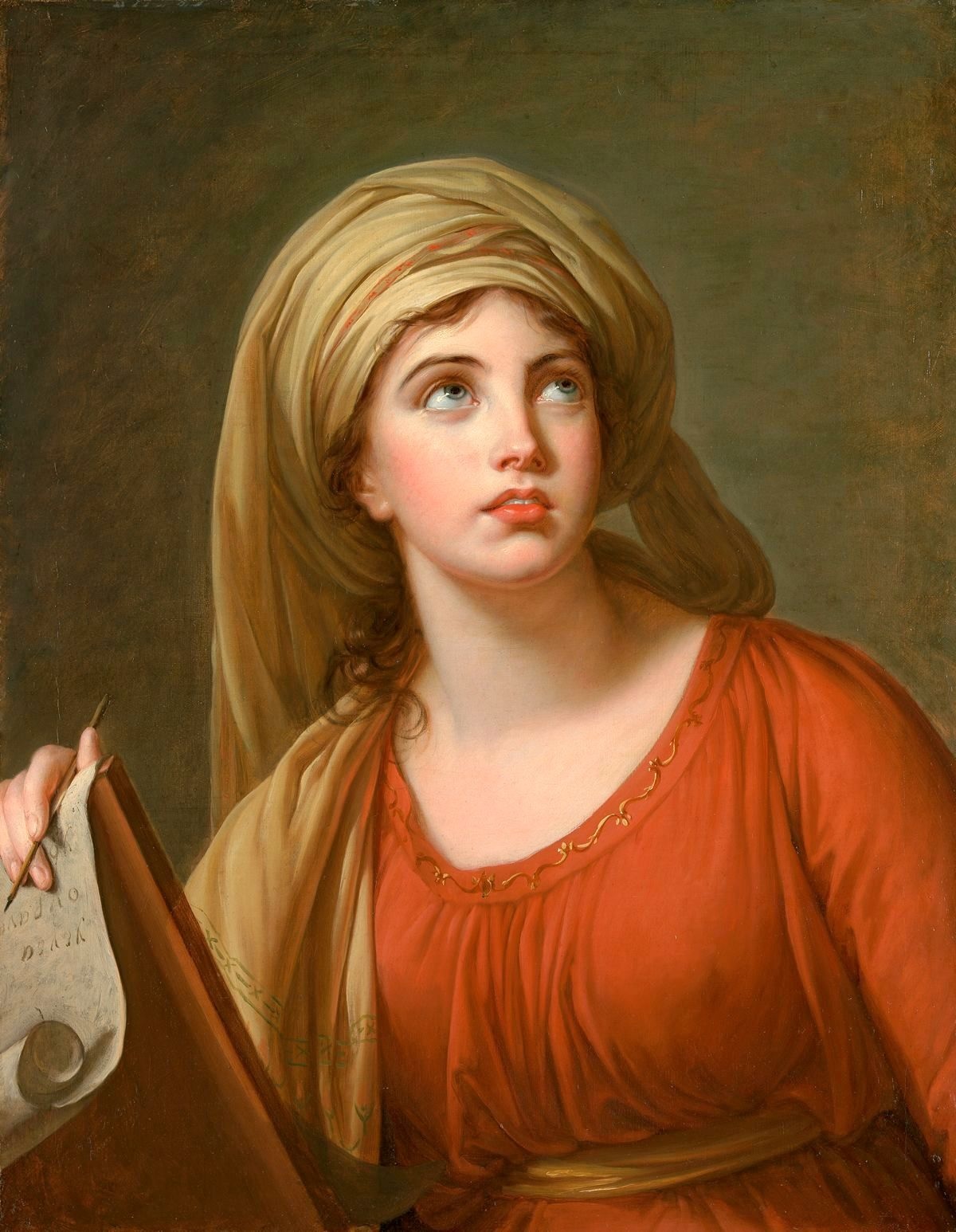
Varro (first century BC, lost but quoted by Lactantius in the early third century AD) and Pausanias (late second century AD) catalogue ten prophetesses under the name of “Sibyl.” (That’s the Latin name; in Greek it’s Sibulla, apparently from Σίοβολλα, a dialectal form of Θεοβούλη “the will of god.”) These are considered historical figures, but the first and most pre-eminent of the ten (after whom the others are presumably named) strays into the legendary, being of semi-divine birth and/or counting the Troian War among her prophesies.
It is interesting that they count ten of them, since a few hundred years earlier, Herakleitos (c. 500 BC) and Platon (fourth century BC) only mention a single Sibyl, presumably the pre-eminent one:
οὐχ ὁρᾷς, ὅσην χάριν ἔχει τὰ Σαπφικὰ μέλη κηλοῦντα καὶ καταθέλγοντα τοὺς ἀκροωμένους; Σίβυλλα δὲ μαινομένῳ στόματι καθ’ Ἡράκλειτον ἀγέλαστα καὶ ἀκαλλώπιστα καὶ ἀμύριστα φθεγγομένη χιλίων ἐτῶν ἐξικνεῖται τῇ φονῇ διὰ τὸν θεόν.
Don’t you see what grace the songs of Sappho have to beguile and bewitch her hearers? But Herakleitos says that Sibulla, with crazed lips singing the unamusing and unadorned and unaromatic, reaches to a thousand years with her song thanks to her god!
(Serapion arguing with Boethos. Plutarkhos on Why the Puthia No Longer Prophesies in Verse §6.)
νῦν δὲ τὰ μέγιστα τῶν ἀγαθῶν ἡμῖν γίγνεται διὰ μανίας, θείᾳ μέντοι δόσει διδομένης. ἥ τε γὰρ δὴ ἐν Δελφοῖς προφῆτις αἵ τ’ ἐν Δωδώνῃ ἱέρειαι μανεῖσαι μὲν πολλὰ δὴ καὶ καλὰ ἰδίᾳ τε καὶ δημοσίᾳ τὴν Ἑλλάδα ἠργάσαντο, σωφρονοῦσαι δὲ βραχέα ἢ οὐδέν: καὶ ἐὰν δὴ λέγωμεν Σίβυλλάν τε καὶ ἄλλους, ὅσοι μαντικῇ χρώμενοι ἐνθέῳ πολλὰ δὴ πολλοῖς προλέγοντες εἰς τὸ μέλλον ὤρθωσαν, μηκύνοιμεν ἂν δῆλα παντὶ λέγοντες.
However, the greatest of goods to us comes by way of mania, at least when it is given as a gift of the gods. For the prophetess at Delphi and the priestesses at Dodona have caused many good things for Hellas in both private and public when possessed, but little or none when right-minded; and if we should speak of Sibulla and others who used prophetic inspiration to foretell many things to many people and guided their future, then it’s clear to all that we should be speaking for a long time.
(Platon, Phaidros 244a-b.)
As you can see, even this Sibyl is treated as a historical figure, counted simply among the likes of Sappho, the Puthia, and the Doves. But good old Diodoros (first century BC) throws this for a loop by equating her with the definitely mythic daughter of Teiresias (whom he calls by a different name than Apollodorus and Pausanias):
ἔπειθ᾽ οἱ μὲν ἐπίγονοι τὴν πόλιν ἑλόντες διήρπασαν, καὶ τῆς Τειρεσίου θυγατρὸς Δάφνης ἐγκρατεῖς γενόμενοι ταύτην ἀνέθεσαν εἰς Δελφοὺς κατά τινα εὐχὴν ἀκροθίνιον τῷ θεῷ. αὕτη δὲ τὴν μαντικὴν οὐχ ἧττον τοῦ πατρὸς εἰδυῖα, πολὺ μᾶλλον ἐν τοῖς Δελφοῖς διατρίψασα τὴν τέχνην ἐπηύξησε: φύσει δὲ θαυμαστῇ κεχορηγημένη χρησμοὺς ἔγραψε παντοδαπούς, διαφόρους ταῖς κατασκευαῖς: παρ᾽ ἧς φασι καὶ τὸν ποιητὴν Ὅμηρον πολλὰ τῶν ἐπῶν σφετερισάμενον κοσμῆσαι τὴν ἰδίαν ποίησιν. ἐνθεαζούσης δ᾽ αὐτῆς πολλάκις καὶ χρησμοὺς ἀποφαινομένης, φασὶν ἐπικληθῆναι Σίβυλλαν: τὸ γὰρ ἐνθεάζειν κατὰ γλῶττανὑπάρχειν σιβυλλαίνειν.
Then the Heirs,* having taken the city, plundered it and captured Laurel,* the daughter of Omen-Reader,* and afterwards sent her to Delphi, since they had promised the best of the spoils* to the god. She knew no less of prophecy than her father, and in spending her time at Delphi, she increased her skill much more; and, led by her marvelous gift, she wrote all sorts of oracles in various writing styles (and in fact they even say the poet Homeros appropriated many of her verses to set them in his own work). Because she was so often prophesying under inspiration, it is said that she is called Will-of-God,* since “to be inspired” was originally called “to speak the will of god.*”
- Heirs: ἐπίγονοι epigonoi. In the first war on Thebai, the seven Argive captains lost (and most of them died). In the second war on Thebai, their children won (and most of them survived). The most notable of the Heirs are Alkmaion (who is the Horos-equivalent in that cycle) and Diomedes (who also fought at Troië, cf. Ilias V).
- Laurel: Δάφνη Daphne.
- Omen-Reader: Τειρεσίας Teiresias.
- best of the spoils: ἀκροθίνιον “top of the heap,” e.g. crème de la crème.
- Will-of-God: Σίβυλλα Sibulla.
- to speak the will of god: σιβυλλαίνειν from θεός-βουλή-αἰνέω.
(Diodoros of Sicily, Library of History IV §66.)
Since Diodoros is the only person anywhere to explicitly say so, the usual scholarly course is to just assume he’s trying to historicize mythology like he and Herodotos so often seem to, but I think he’s actually onto something here.
Pausanias (X xii §§2–7) records some biographical information about this first Sibyl, saying that she claimed to have been born on Ida of a mortal father and a fairy, to be married to Apollon, to have prophesied the destruction of Troië, to have wandered all over but stopping at Kolophon and Delphi, and to have died on Ida but to continue prophesying as a disembodied voice. He also records several lines of hers in epic verse.
Ploutarkhos (On Why the Puthia no Longer Prophesies in Verse §9) is terse but gives a little more detail, saying that Sibyl arrived at Delphi from Mount Helikon (beside Thebai), where she was raised by the Mousoi, and she will ceaselessly prophesy even after death, inspiring all other forms of prophecy from rumours to haruspicy.
But each of these points agrees with what little remains of the myth of Manto:
All this is to say, I suspect the first Sibyl is mythical: not only is she the Manto of the Thebaian cycle, but she is perhaps a symbol representing the word of Apollon and his Mousoi, the Epic Cycle itself, which seems to have come out of (and become more successful than) the Thebaian cycle, just as Manto came from and grew more skilled than Teiresias.
As for the others called Sibyl, well, we have prophetesses and mediums even today, so it is perhaps not a stretch to consider them to simply have borrowed the name of their nearest mythic equivalent.
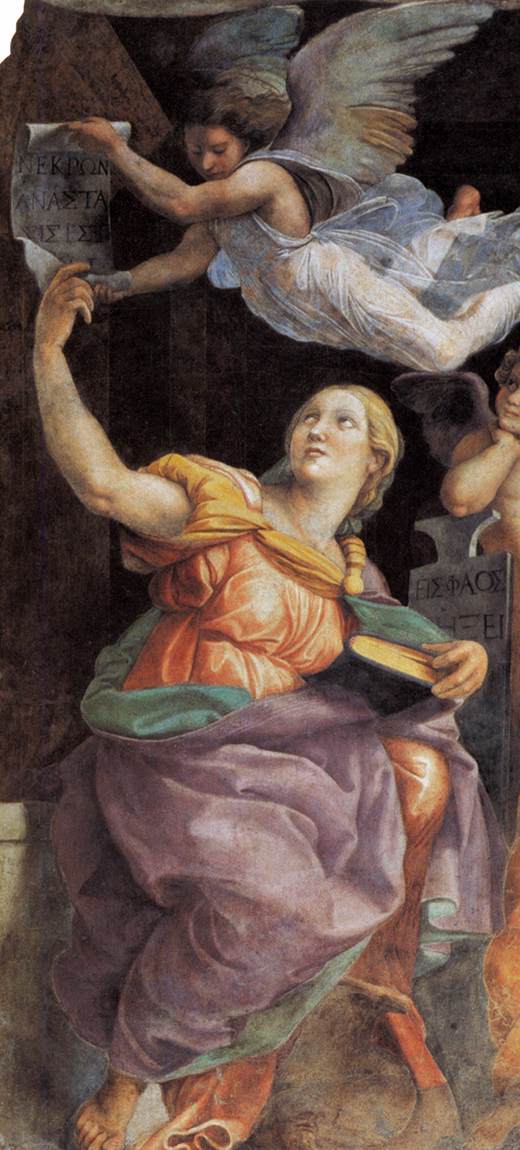
There is an whole mess of literature ascribed to Sibyl, just as with Orpheus or Hermes Trismegistus; but what we have seem to fall into three categories.
First are those of the “Sibylline Books,” apparently sold at grievous cost to the last king of Rome (c. 500 BC) by the Cumaean Sibyl and were consulted only in times of dire necessity, until they were destroyed c. 80 BC, whereupon any fragments considered “Sibylline” were collected into a new book and consulted in the same way. Some of these latter fragments (concerning how to avert the disaster portended to Rome by the omen of an intersex child being born) are recorded by Phlegon of Tralles in his Book of Marvels. Historically interesting, I suppose, but not of any particular use to me.
Second are those of the “Sibylline Oracles,” which are obviously polemic forgeries written by Jewish and Christian authorities to denounce paganism and shore up their nation- and state-building claims, respectively. Fourteen entire books and a number of quoted fragments, some lengthy, are extant. While some of it is amusing in a bleak sort of way, I find none of it of any deeper significance.
Finally are those of the “first” Sibyl (which I take to be mythical and part of the wider Epic tradition, now lost but for Homeros). Of these, so far as I can ascertain, only two fragments remain: Pausanias summarizes a section related to her identity and in particular quotes four lines referring to her birth verbatim, and Ploutarkhos summarizes a section referring to her death. For my own amusement, I’ve transcribed and translated these.
πέτρα δέ ἐστιν ἀνίσχουσα ὑπὲρ τῆς γῆς: ἐπὶ ταύτῃ Δελφοὶ στᾶσάν φασιν ᾆσαι τοὺς χρησμοὺς γυναῖκα ὄνομα Ἡροφίλην, Σίβυλλαν δὲ ἐπίκλησιν. [...] Δήλιοι δὲ καὶ ὕμνον μέμνηνται τῆς γυναικὸς ἐς Ἀπόλλωνα. καλεῖ δὲ οὐχ Ἡροφίλην μόνον ἀλλὰ καὶ Ἄρτεμιν ἐν τοῖς ἔπεσιν αὑτήν, καὶ Ἀπόλλωνος γυνὴ γαμετή, τοτὲ δὲ ἀδελφὴ καὶ αὖθις θυγάτηρ φησὶν εἶναι. ταῦτα μὲν δὴ μαινομένη τε καὶ ἐκ τοῦ θεοῦ κάτοχος πεποίηκεν: ἑτέρωθι δὲ εἶπε τῶν χρησμῶν [...]:
εἰμὶ δ’ ἐγὼ γεγαυῖα μέσον θνητοῦ τε θεᾶς τε,
νύμφης δ’ ἀθανάτης, πατρὸς δ’ αὖ κητοφάγοιο,
μητρόθεν Ἰδογενής, πατρὶς δέ μοί ἐστιν ἐρυθρή
Μάρπησσος, μητρὸς ἱερή, ποταμός τ’ Ἀιδωνεύς.Then, there’s a rock towering over the ground upon which the Delphians say a woman named Beloved-of-a-Hero* and nicknamed Will-of-God* stood to sing her oracles. [...] The Delians* also recite a hymn she wrote to Destroyer,* in which she calls herself not only Beloved-of-a-Hero but also Rectifier,* and she says to be each of Destroyer’s wife and sister and even his daughter; indeed, she wrote all this while out of her mind and possessed by the god. She writes elsewhere in her oracles [...],
I was born in between mortal and god,
of an immortal fairy and a sea-monster-eating* father,
native to Ida by my mother, but home to me is red
Spirited-Away,* sacred to the Mother* and the Unseen* river.
- Beloved-of-a-Hero: Ἡροφίλη Herophile. Beloved-of-Hera is also possible, but I think the former is more likely at least from a mythic standpoint, since she claims Apollon (the god of heroes) as her husband.
- Will-of-God: Σίβυλλα Sibulla.
- Delians: typo for “Delphians?”
- Destroyer: Ἀπόλλων Apollon “he destroys utterly.”
- Rectifier: Ἄρτεμις Artemis “she sets right” from ἀρτεμής artemes “exactly fitted to its situation, just as it should be, apt” (cf. Odusseia XIII 43; Platon, Kratulos 406b). These interpretations of Apollon and Artemis might seem backwards to modern students, but I believe they are at least approximately correct; however, to explain why would be to speak too openly of the Mysteries, I think.
- sea-monster-eating: yes, really! Editors assume this is a typo for σιτοφάγος “bread-eating,” but I think we are in mythic territory and this statement is quite sensible in that context.
- Spirited-Away: Μάρπησσος Marpessos. Pausanias says this is a small village on Ide, but this is silly, since Ide is her mother’s home, not her father’s. No, this whole little verse evokes the “I am child of earth and starry heaven, but my race is of heaven” of the mystery schools; so I derive Marpessos as a mythic location (from ἀναρπάζω, cf. Marpesse at Ilias V 557, V 564; Persephoneia at Homeric Hymn to Demeter 3, 19, 56, 81; Ganumedes at Homeric Hymn to Aphrodite 203), as the place where souls are “spirited away” to by Apollon. It is noteworthy that this is equivalent to Empedokles’s Air, to which he also assigns the color “red.”
- The Mother: referring to Nut/Rhea/Kubele/etc.
- Unseen: Ἀιδωνεύς Aidoneus, a variant of Ἀΐδης Aïdes, referring to the Nile/Styx/Gallos/etc., that is, the Milky Way (cf. Sallustios on the Gods and the World §4).
(Pausanias, Description of Hellas X xii §§1–3.)
ἐπειδὴ γὰρ ἔστημεν κατὰ τὴν πέτραν γενόμενοι τὴν κατὰ τὸ βουλευτήριον, ἐφ’ ἧς λέγεται καθίζεσθαι τὴν πρώτην Σίβυλλαν ἐκ τοῦ Ἑλικῶνος παραγενομένην ὑπὸ τῶν Μουσῶν τραφεῖσαν [...], ὁ μὲν Σαραπίων ἐμνήσθη τῶν ἐπῶν, ἐν οἷς ὕμνησεν ἑαυτήν, ὡς οὐδ’ ἀποθανοῦσα λήξει μαντικῆς: ἀλλ’ αὐτὴ μὲν ἐν τῇ σελήνῃ περίεισι τὸ καλούμενον φαινόμενον γενομένη πρόσωπον, τῷ δ’ ἀέρι τὸ πνεῦμα συγκραθὲν ἐν φήμαις ἀεὶ φορήσεται καὶ κληδόσιν: ἐκ δὲ τοῦ σώματος μεταβαλόντος ἐν τῇ γῇ πόας, καὶ ὕλης ἀναφυομένης, βοσκήσεται ταύτην ἱερὰ θρέμματα, χρόας τε παντοδαπὰς ἴσχοντα καὶ μορφὰς καὶ ποιότητας ἐπὶ τῶν σπλάγχνων ἀφ’ ὧν αἱ προδηλώσεις ἀνθρώποις τοῦ μέλλοντος.
Then we stood by the rock which was next to the assembly house,* on which it is said the first Will-of-God* sat after coming from Helikon* under the care of the Guides* [...], and Of-Sarapis* recited the verses in which she sang around herself: how that, even in death, she would never cease prophesying, but that, turning into “the face in the Moon,” she would go around and around; her spirit would mix with the air and forever be carried in synchronicities and signs, while her body would mix with the earth, become grass and vegetation, be eaten by sacrificial animals, and become every sort of color and shape and quality on their organs by which people perform divinations.
- next to the assembly house: much as I am hostile to Google, I do think it’s neat that one can see Sibyl’s rock next to (the foundation of) the assembly house and the Athenian treasury on Maps, as I will never be able to travel to Europe.
- Will-of-God: Σίβυλλα Sibulla. Later in the dialogue (§14), Ploutarkhos also says this is a nickname, giving her proper name as Herophile of Eruthrai.
- Helikon: the sacred mountain in Boiötiä, central in the many myths (particularly those of the Mousai and Teiresias).
- Guides: Μοῦσαι Mousai “Muses” supposedly from μῶ “I seek,” suggesting “guides of those who seek.”
- Of-Sarapis: Σαραπίων Sarapion, a theophoric name like Apollonios “Of-Apollon” or Artemisia “Of-Artemis.” In the story, he is an Athenian poet touring Delphi.
(Plutarkhos on Why the Puthia No Longer Prophesies in Verse §9.)
Hesidos’s “races of men” is usually, following Ovid, taken to refer to successive periods in time: that is, there was a golden age, followed by a silver age, etc. etc., with the world degenerating over time until one comes to our lamentable iron age. But way back when I was first really digging into the Works and Days, my angel counselled me to consider the races as ontological rather than temporal: that is, to treat them as categories of beings ranging the continuum from divine to human. I’ve written about this topic quite a lot over the years, so it’s clearly been a fruitful framework for me.
Little did I realize that Ploutarkhos agrees with my angel!
Ἡσίοδος δὲ
but Hesiodos καθαρῶς καὶ διωρισμένως πρῶτος ἐξέθηκε
was the first to expound, cleanly and distinctly,
τῶν λογικῶν τέσσαρα γένη,
the four kinds of intellectual beings: θεοὺς
gods εἶτα
then δαίμονας
distributors
εἶθ᾽
then ἥρωας,
heroes τὸ δ᾽ ἐπὶ πᾶσιν
and finally ἀνθρώπους.
people.
(Ploutarkhos on the Failing of Oracles §10.)
εἰς τέσσαρα διαιρεῖ τὴν λογικὴν πᾶσαν φύσιν,
All things of an intellectual nature are divided into four parts:
τὴν μὲν πρώτην θεῶν,
first, that of gods; τὴν δὲ δευρέραν δαιμόνων,
second, that of distributors;
τὴν δὲ τρίτην ἡρώων,
third, that of heroes; καὶ τὴν τετάρτην ἀνθρώπων.
and fourth, that of people.
(Ploutarkhos on the Works and Days, fragment 6.)
These four correspond to the denizens of fire, air, water, and earth, and the categories of beings which I have been calling gods, angels, daimons, and humans.
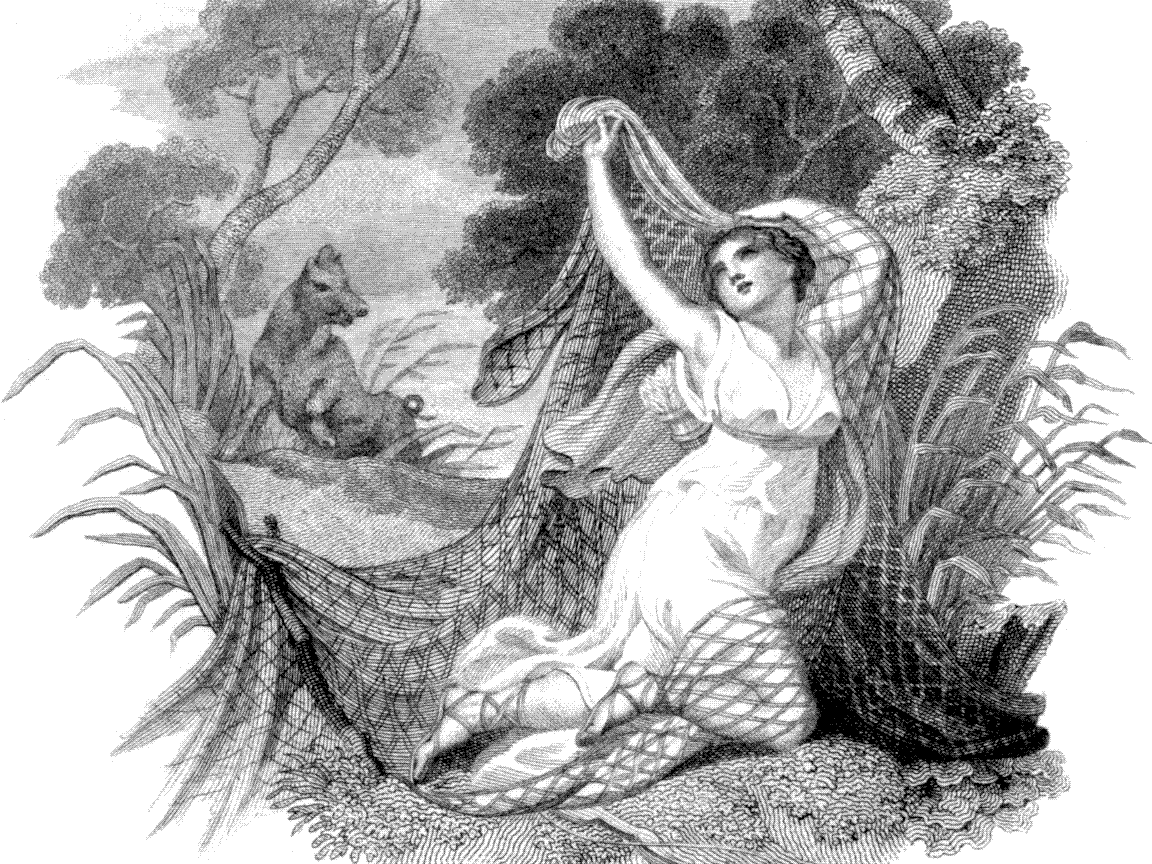
I woke up in the middle of the night with the name “Britomart,” which I had never heard before, firmly affixed in my mind. I’ve long since learned not to ignore such things, so I wrote it down before going back to sleep. It sounded to me like the name of a department store chain, but it turns out that it’s the name of a Cretan hero, Βριτόμαρτις Britomartis, who was the favorite of Artemis and deified by her. Solinus, writing in Latin, says (XI §8) that the name means virgo dulcis “the sweet maiden,” and Hesukhios’s dictionary gives βριτύ britu as Cretan dialectal for γλυκύ gluku “sweet,” so this seems plausible enough.
Her cult is presumably very old. Pausanias says (IX xl §3) that her xoanon in the temple at Olus was made by Daidalos himself (two generations before the Troian War): this probably refers to its style rather than its literal creator (given that Daidalos was, you know, mythical), but even that suggests an early date (prior to historical times). Despite this, her myth comes down to us only via a few late sources. The earliest and most complete of these is Kallimakhos (third century BC), and I’ve translated it for my own edification.
ἔξοχα δ’ ἀλλάων
And above all others Γορτυνίδα φίλαο νύμφην,
you* loved the maiden* of Gortus,*
ἐλλοφόνον
fawn-slaying Βριτόμαρτιν
Britomartis ἐύσκοπον:
sharp-sighted, ἧς
of whom ποτε Μίνως
Minos* once,
πτοιηθεὶς ὑπ’ ἔρωτι
enflamed by desire, κατέδραμεν
chased over οὔρεα Κρήτης.
the hills of Krete.
ἡ δ’ ὁτὲ μὲν λασίῃσιν ὑπὸ δρυσὶ κρύπτετο νύμφη,
And sometimes the maiden hid herself under shaggy trees,
ἄλλοτε δ’
and at others εἱαμενῇσιν:
in wetlands, ὁ δ’ ἐννέα μῆνας
but for nine months he ἐφοίτα
went in and out
παίπαλά τε κρημνούς τε
of the clefts and crevices* καὶ
and οὐκ ἀνέπαυσε διωκτύν,
never ceased his persecution,*
μέσφ’ ὅτε μαρπτομένη
until she was almost caught καὶ δὴ
and then σχεδὸν ἥλατο πόντον
she leapt into the nearby sea
πρηόνος ἐξ ὑπάτοιο
from a clifftop καὶ
and ἔνθορεν εἰς ἁλιήων // δίκτυα,
fell into the nets* of fishermen,
τά σφ’ ἐσάωσαν:
who saved her. ὅθεν μετέπειτα
From then on Κύδωνες
the Kudonians*
νύμφην μὲν
call the maiden Δίκτυναν,
Diktunna,* ὄρος δ’
and the hill ὅθεν ἥλατο νύμφη
from which she leapt
Δικταῖον καλέουσιν,
they call Diktaion,* ἀνεστήσαντο δὲ
and they raised βωμοὺς
altars
ἱερά τε ῥέζουσι:
and offered sacrifices; τὸ δὲ στέφος
and the garland ἤματι κείνῳ
on that day
ἢ πίτυς ἢ σχῖνος,
is either pine or mastic, μύρτοιο δὲ
but of myrtle* χεῖρες ἄθικτοι:
the hands are not to touch:
δὴ τότε γὰρ
since, before, πέπλοισιν ἐνέσχετο μύρσινος ὄζος // τῆς κούρης,
a branch of myrtle snagged the girl’s clothes
ὅτ’ ἔφευγεν:
while she was fleeing, ὅθεν
and so μέγα χώσατο
she became very angry μύρτῳ.
with it.
Οὖπι
Oupis* ἄνασσ’
queen εὐῶπι
lovely-faced φαεσφόρε,
light-bringer, καὶ δὲ σὲ κείνγς
that even you
Κρηταέες
the Cretans καλέουσιν
call ἐπωνυμίην ἀπὸ νύμφης.
by the name of the maiden!*
- you: the hymn is addressed to Artemis.
- maiden: νύμφη “nymph,” but Diodoros (V §76) and Pausanias (VIII ii §4) tell us that Britomartis is the daughter of Zeus and a mortal woman and number her among the mortals that became gods, so “nymph” is being used in the sense of “a girl of marriageable age” rather than “a fairy.” For clarity, I translate νύμφη as “maiden” and κούρη koure as “girl,” though this is slightly awkward.
- Gortus: a city in Crete (cf. Odusseia III 294), apparently from γόρτυξ=ὄρτυξ “quail-town.”
- Minos: son of Zeus and Europe (cf. Ilias XIV 321), king of Crete (cf. Ilias XIII 450), judge over the dead (cf. Odusseia XI 568).
- he went in and out of the clefts and crevices: this is an attempt to render the suggestiveness of the Greek; ἐννέα μῆνας “nine months” is, of course, the gestational period; φοιτάω “to go back and forth” is a euphemism for intercourse; παίπαλά “shaken spots” (from παιπάλλω, a repetition of πάλλω “to sway” and given by Hesukhios as equivalent to σείω “to shake,” hence suggestive of a place disrupted by vibration) is suggestive of both intercourse and labor, and κρημνός “riverbank” is a euphemism for the vulva. This is all, of course, a poetic device to suggest the “act” preceding the “birth” of a new goddess, and to contrast Britomartis's sexual desirability with her purity. Kallimakhos is obviously very clever!
- persecution: διωκτύν dioktun as a pun on Diktunna and Diktaios.
- nets: δίκτυα diktua as a pun on Diktunna and Diktaios.
- Kudonians: one of the tribes of Crete (cf. Odusseia III 292, XIX 176).
- Diktunna: “the persecuted one” or “the netted one” (per above notes).
- Diktaios: “place of persecution” or “place of nets” (per above notes).
- myrtle: myrtle is famously sacred to Aphrodite.
- Oupis: from ὤψ “eye,” an epithet of Artemis.
- call by the name of the maiden: Diktunna was also an epithet of Artemis.
(Kallimakhos, Hymn to Artemis 189–205.)
You all remember how fond I am of Krates, yes? It turns out a few lines of verse of his are extant, but I couldn’t find translations of most of them (par for the course), so I thought I would translate them myself. They’re full of irony, but one would expect no less!
οὐχ εἷς πάτρᾳ μοι πύργος,
There isn’t a single wall in my homeland, οὐ μία στέγη,
nor one roof,
πάσης δὲ χέρσου
but every land καὶ
and πόλισμα
city καὶ
and δόμος
house
ἕτοιμος ἡμῖν ἐνδιαιτᾶσθαι πάρα.
is ready made for us to live in.
(Diogenes Laertius, The Lives and Opinions of Eminent Philosophers VI vii “Hipparkhia.”)
οὐκ οἶσθα,
Don’t you know πήρα δύναμιν ἡλίκην ἔχει
how much power is in a haversack,
θέρμων τε χοῖνιξ
a quart* of lupins, καὶ
and τὸ μηδενὸς μέλειν;
freedom from worry?
- quart: a χοῖνιξ is approximately one quart or one liter.
(Stobaios, Anthology 97.31.)
ῶνείδισάς μοι γῆρας ὡς κακὸν μέγα,
οὗ μὴ τυχόντι θάνατός ἐσθ’ ἡ ζημία,
οὗ πάντες ἐπιθυμοῦμεν· ἢν δ’ ἔλθῃ ποτέ,
ἀνιώμεθ’· οὕτων ἐσμὲν ἀχάριστοι φύσει.You complain that old age is a great evil?
But a violent death is the price of not attaining it!
All things long for it, but when it does come,
we’re distressed? How ungrateful we are!
(Stobaios, Anthology 115.9.)
ὁ γὰρ κρόνος
For Time μ’ ἔχαμυε,
has gripped me, τέκτων μὲν σοφός,
a clever craftsman
ἅπαντα δ’ ἐργαζόμενος
that makes everything ἀσθενέστερα.
(and makes everything weaker).
(Stobaios, Anthology 116.31.)
Oh! But we’re not done with Britomartis yet, as my angel teases me with another reference to her. This one concerns the apotheosis of Apollonios of Tuana, the famous Pythagorean miracle worker.
(I don’t feel this translation is quite up to snuff; late Greek is, to be honest, a giant mess and very difficult for me compared to the Epics. I leaned on F. C. Conybeare’s translation in the Loeb edition of The Life of Apollonios of Tuana to make sense of it, since I found a number of idioms to be totally opaque. Still, the act of trying has its merits.)
διατρίβειν μὲν γὰρ
As time passed ἐν τῇ Κρήτῃ
in Crete, τὸν Ἀπολλώνιον
Apollonios
μᾶλλον ἢ πρὸ τούτου θαυμαζόμενον,
became more admired than before, ἀφικέσθαι δ’
and he arrived ἐς τὸ ἱερὸν
at the shrine
τῆς Δικτύννης
of Diktunna ἀωρί,
after hours. φυλακὴ δὲ τῷ ἱερῷ κυνῶν ἐπιτέτακται
A squad of dogs was set over the shrine
φρουροὶ
as guardians τοῦ ἐν αὐτῷ πλούτου,
of its treasure, καὶ
and ἀξιοῦσιν αὐτοὺς οἱ Κρῆτες
the Cretans considered them
μήτε τῶν ἄρκτων μήτε τῶν ὧδε ἀγρίων λείπεσθαι,
no less fierce than bears or any other wild beasts, οἱ δ’
but they,
οὔθ’ ὑλακτεῖν
rather than barking ἥκοντα
at his coming, σαίνειν τε αὐτὸν προσιόντες,
went over and fawned on him,
ὡς μηδὲ τοὺς ἄγαν ἐθάδας.
moreso even than their friends. οἱ μὲν δὴ τοῦ ἱεροῦ προϊστάμενοι
So, those in charge of the shrine
ξυλλαβόντες αὐτὸν ὡς γόητα καὶ λῃστὴν δῆσαι
arrested and bound him as a thief and a sorcerer,
μείλιγμα τοῖς κυσὶ προβεβλῆσθαί τι ὑπ’ αὐτοῦ φάσκοντες,
accusing him of having thrown some charm to the dogs;
ὁ δ’ ἀμφὶ μέσας νύκτας
but around midnight he ἑαυτὸν λῦσαι,
freed himself, καλέσας δὲ
and, calling
τοὺς δήσαντας,
those who bound him ὡς
so that μὴ λάθοι,
they wouldn’t miss it, δραμεῖν
he ran
ἐπὶ τὰς τοῦ ἱεροῦ θύρας,
over to the doors of the shrine, αἱ δ’
which ἀνεπετάσθησαν,
were flung open,
παρελθόντος δὲ ἔσω
and, passing within, τὰς μὲν θύρας
the doors ξυνελθεῖν,
closed, ὥσπερ
as if
ἐκέκλειντο,
on their own, βοὴν δὲ
and the sound ᾀδουσῶν παρθένων
of maidens singing ἐκπεσεῖν.
came from inside.
τὸ δὲ ᾆσμα ἦν:
Their song was, ‘στεῖχε
“come γᾶς,
from earth, στεῖχε
come ἐς οὐρανόν,
to heaven, στεῖχε.’
come!”
(Philostratos, Life of Apollonios of Tuana VIII §30.)
Oh! The iron race gets horrible over time because it rusts...
Of course I translated all the other passages of antiquity related to Britomartis. (It wasn’t hard, there’s only a few.) Out of fondness for Artemis of the Golden Distaff, I will refrain from interpreting the myth or even explaining why my angel sent me down this particular rabbit-hole, but I see no reason not to post my translations in case anybody finds them of interest:
ἐν Αἰγίνῃ δὲ
And in Aegina πρὸς τὸ ὄρος τοῦ Πανελληνίου Διὸς ἰοῦσιν,
as you go towards the mountain of Zeus of all Hellenes,
ἔστιν Ἀφαίας ἱερόν,
there is a temple of Aphaia,* ἐς ἣν
to which καὶ Πίνδαρος
even Pindaros
ᾆσμα Αἰγινήταις ἐποίησε.
wrote a song* for the Aeginians. φασὶ δὲ οἱ Κρῆτες—
And the Cretans say τούτοις γάρ
(for these things
ἐστι
are τὰ ἐς αὐτὴν ἐπιχώρια—
those of their nation) Καρμάνορος
of Karmanor,* τοῦ καθήραντος
who purified
Ἀπόλλωνα
Apollon ἐπὶ φόνῳ τῶ Πύθωνος
of slaying Puthon,* παῖδα Εὔβουλον εἶναι,
there was a child, Euboulos,*
Διὸς δὲ
and of Zeus καὶ
and Κάρμης
Karme* τῆς Εὐβούλου
the daughter of Euboulos
Βριτόμαρτιν γενέσθαι:
was born Britomartis.* χαίρειν δὲ αὐτὴν
Now, she delighted in
δρόμοις τε καὶ θήραις
both sprinting and hunting καὶ
and Ἀρτέμιδι μάλιστα φίλην εἶναι:
was the favorite of Artemis,
Μίνω δὲ ἐρασθέντα φεύγουσα
but, fleeing a lustful Minos,* ἔρριψεν ἑαυτὴν
she threw herself ἐς δίκτυα
into nets*
ἀφειμένα
cast* ἐπ’ ἰχθύων θήρᾳ.
for catching fish. ταύτην μὲν θεὸν ἐποίησεν Ἄρτεμις,
Artemis made her a god,*
σέβουσι δὲ οὐ Κρῆτες μόνον
and so not only do the Cretans worship her ἀλλὰ καὶ
but also Αἰγινῆται,
the Aeginians,
λέγοντες
saying that φαίνεσθαί σφισιν ἐν τῇ νήσῳ τὴν Βριτόμαρτιν.
Britomartis appears to them on their island.
ἐπίκλησις δέ οἱ
Her epithet παρά τε Αἰγινήταις
among the Aeginians ἐστὶν
is Ἀφαία
Aphaia* καὶ
and
Δίκτυννα
it is Diktunna* ἐν Κρήτῃ.
on Crete.
- temple of Aphaia: the remains of which are still standing.
- Pindaros wrote a song: which is not extant.
- Karmanor: very speculatively from κέκαρμαι-ἀνήρ “the man cuts himself off;” given that his son’s mother is Demeter (per below note), this is suggestive of Isis and Osiris (whose penis is cut off and eaten by a fish), Kubele and Attis (who cuts his own penis off in a fit of madness), etc.
- of slaying Puthon: cf. Homeric Hymn to Apollon 300–74.
- Euboulos: from εὐ-βουλή “of good counsel;” the son of Demeter (cf. Diodoros of Sicily, Library of History V §76), identified with Dionusos (cf. Orphic Hymn to Dionusos).
- Karme: very speculatively from κέκαρμαι “she has herself cut” (see the note on Antoninos Liberalis’s version of the myth, below). I don’t believe the reasoning there is convincing here, since Karmanor is Osiris, meaning that Demeter must be Isis; perhaps that is suggestive that the myth has been transplanted to Aegina and grafted onto an existing framework, perhaps that of nearby Eleusis (per above note). (Or, of course, my speculative etymology is bad!)
- Britomartis: “sweet maiden” (cf. Solinus, Polyhistor XI §8).
- Minos: son of Zeus and Europe, king of Crete, judge over the dead (cf. Odusseia XI 568).
- nets: δίκτυα diktua as a pun on Diktunna.
- cast: ἀφίημι aphiëmi is a pun a Aphaia.
- Artemis made her a god: indicating that she’s a hero, rather than a nymph (like Kallimakhos says). Pausanias reiterates this in Description of Hellas VIII ii §4.
- Aphaia: “the released one” (per above note).
- Diktunna: “the netted one” (per above note).
(Pausanias, Description of Hellas II xxx §3.)
καὶ
And ἐμέ
I, γε
at least, ὁ λόγος οὗτος πείθει,
believe this story,* λέγεται δὲ
it being told
ὑπὸ Ἀρκάδων
by the Arcadians ἐκ παλαιοῦ,
of old, καὶ
and τὸ εἰκὸς
likelihood αὐτῷ πρόσεστιν.
approaches to it,
οἱ γὰρ δὴ τότε ἄνθρωποι
for indeed, the men of those days ξένοι καὶ ὁμοτράπεζοι θεοῖς ἦσαν
were guests and tablemates of the gods
ὑπὸ δικαιοσύνης
because of their righteousness καὶ
and εὐσεβείας,
piety, καί
and
σφισιν ἐναργῶς ἀπήντα παρὰ τῶν θεῶν τιμή τε οὖσιν ἀγαθοῖς
honor from the gods openly met with those who were good, καὶ
and
ἀδικήσασιν ὡσαύτως ἡ ὀργή,
likewise wrath to wrongdoers; ἐπεί τοι καὶ θεοὶ τότε
and so in those days gods ἐγίνοντο
transformed
ἐξ ἀνθρώπων,
from men, οἳ γέρα
and honors καὶ ἐς τόδε ἔτι
even to this day ἔχουσιν
are given them, ὡς
like
Ἀρισταῖος
Aristaios καὶ
and Βριτόμαρτις
Britomartis ἡ Κρητικὴ
of Crete καὶ
and Ἡρακλῆς
Herakles
ὁ Ἀλκμήνης
son of Alkmene καὶ
and Ἀμφιάραος
Amphiraos ὁ Ὀικλέους,
son of Oikles, ἐπὶ δὲ αὐτοῖς
and besides these
Πολυδεύκης τε καὶ Κάστωρ.
Poludeukes and Kastor together.*
- this story: of Lukaon being transformed into a wolf by Zeus.
- together: τε καὶ indicates that the two things are joined somehow, here because the two share immortality.
(Pausanias, Description of Hellas VIII ii §4.)
Δαιδάλου δὲ τῶν ἔργων
Regarding the works of Daidalos, δύο μὲν ταῦτά ἐστιν
there are two of these ἐν Βοιωτοῖς,
in Boiotia,
Ἡρακλῆς τε
a Herakles ἐν Θήβαις
in Thebai καὶ
and παρὰ Λεβαδεῦσιν ὁ Τροφώνιος,
the Trophonios at Lebadeia;
τοσαῦτα δὲ ἕτερα
and additionally as many ξόανα
wooden icons ἐν Κρήτῃ,
in Krete, Βριτόμαρτις
a Britomartis
ἐν Ὀλοῦντι
in Olous καὶ
and Ἀθηνᾶ
an Athena παρὰ Κνωσσίοις:
at Knossos; παρὰ τούτοις δὲ καὶ
and near these is also
ὁ τῆς Ἀριάδνης χορός,
the dance-floor of Ariadne, οὗ καὶ Ὅμηρος
which Homeros even
ἐν Ἰλιάδι μνήμην ἐποιήσατο,
made mention of in the Ilias:* ἐπειργασμένος ἐστὶν
it is engraved
ἐπὶ λευκοῦ λίθου.
upon white stone. καὶ Δηλίοις Ἀφροδίτης ἐστὶν
There is also a Delian Aphrodite,
οὐ μέγα ξόανον,
a not large wooden icon, λελυμασμένον τὴν δεξιὰν χεῖρα
her right hand maltreated
ὑπὸ τοῦ χρόνου:
by time, κάτεισι δὲ
and she goes down, ἀντὶ ποδῶν
instead of feet,
ἐς τετράγωνον σχῆμα.
into a square shape. [...]
πέρα δὲ
But beyond these, οὐκ οἶδα
I don’t know of
ὑπόλοιπα ὄντα
any extant works τῶν Δαιδάλου:
of Daidalos: τοῖς γὰρ
since regarding those
ἀνατεθεῖσιν ὑπὸ Ἀργείων ἐς τὸ Ἡραῖον
dedicated to the Heraion by the Argives καὶ
and
ἐς Γέλαν τὴν ἐν Σικελίᾳ κομισθεῖσιν
carried to Gela in Sikelia* ἐξ Ὀμφάκης,
from Omphake,
ἀφανισθῆναί σφισιν ὁ χρόνος καθέστηκεν αἴτιος.
time is responsible for causing them to disappear.
- in the Ilias: XVIII 591–2.
- Sikelia: modern Sicely.
(Pausanias, Description of Hellas IX xl §§3–4.)
Κασσιεπείας
Of Kassiepeia* τῆς Ἀραβίου
the daughter of Arabios* καὶ
and Φοίνικος
Phoinix*
τοῦ Ἀγήνορος
the son of Agenor* ἐγένετο
was born Κάρμη·
Karme.* ταύτῃ μιγεὶς Ζεὺς
Zeus, mixing with her,
ἐγέννησε
fathered Βριτόμαρτιν.
Britomartis.* αὕτη
She, φυγοῦσα
forsaking
τὴν ὁμιλίαν τῶν ἀνθρώπων
human society, ἠγάπησεν
was content ἀεὶ παρθένος εἶναι.
to always be a virgin. καὶ
And
παρεγένετο πρῶτα μὲν
she first came ἐπ’ Ἄργος
to Argos* ἐκ Φοινίκης
from Phoenecia, παρὰ
staying with
τὰς Ἐρασίνου θυγατέρας
the daughters of Erasinos:* Βύζην
Buze* καὶ
and Μελίτην
Melite* καὶ
and Μαῖραν
Maira*
καὶ
and Ἀγχιρόην·
Ankhiroë.* ἔπειτα δ’
And then ἐκ τοῦ Ἄργους
from Argos εἰς Κεφαλληνίαν
to Kephallenia
ἀνέβη
she sailed, καὶ
and αὐτὴν ὠνόμασαν οἱ Κεφαλλῆνες
the Kephallenians called her Λαφρίαν·
Laphria* καὶ
and
ἱερὸν ἤγαγον
lead sacrificial victims to her ὡς
as θεῷ.
to a god. ἔπειτα
Then ἔρχεται
she went
εἰς Κρήτην,
to Crete, καὶ
and αὐτὴν ἰδὼν Μίνως καὶ ἐρασθεὶς
seeing and desiring her, Minos* ἐδίωκεν·
pursued her;
ἡ δὲ
but she κατέφυγε
took refuge παρ’ ἄνδρας ἁλιέας·
with seafaring men οἱ δὲ
and they
αὐτὴν κατέδυσαν εἰς τὰ δίκτυα
hid her under their nets,* καὶ
and ὠνόμασαν ἐκ τούτου Κρῆτες
from this the Cretans called her
Δίκτυνναν
Diktunna* καὶ
and ἱερὰ προσήνεγκαν.
carry sacrifices to her. ἐκφυγοῦσα δὲ Μίνωα
After escaping from Minos,
ἐξίκετο ἡ Βριτόμαρτις
Britomartis came εἰς Αἴγιναν
to Aegina ἐν πλοίῳ
in a boat σὺν ἀνδρὶ ἁλιεῖ
with a seafaring man,
Ἀνδρομήδει
Andromedes.* καὶ ὁ μὲν
And he, αὐτῇ ἐνεχείρησεν ὀρεγόμενος μιχθῆναι·
desiring to mix with her, laid hands on her,
ἡ δὲ Βριτόμαρτις
but Britomartis ἀποβᾶσα ἐκ τοῦ πλοίου
ran out of the boat κατέφυγεν εἰς ἄλσος,
and took refuge in a grove,
ὅθιπέρ
just where ἐστι νῦν
there is now αὐτῆς τὸ ἱερόν,
a temple* to her, κᾀνταῦθα
and here
ἐγένετο ἀφανής
she disappeared* καὶ
and ὠνόμασαν αὐτὴν
they called her Ἀφαίαν.
Aphaia.*
ἐν δὲ τῷ ἱερῷ τῆς Ἀρτέμιδος τόνδε τόπον,
And this spot in the sanctuary of Artemis,
ἐν ᾧ ἀφανὴς ἐγένετο ἡ Βριτόμαρτις,
in which Britomartis disappeared, ἀφιέρωσαν Αἰγινῆται
the Aeginians consecrated καὶ
and
ὠνόμασαν Ἀφαίην
called her Aphaia καὶ
and ἱερὰ ἐπετέλεσαν
complete sacrifices ὡς
as θεῷ.
to a god.
- Kassiepeia: from κασία-ὤψ “cassia-faced,” perhaps referring to her dark complexion or her exotic beauty or the like. Cassia is a cinnamon-like spice which the Greeks imported from Arabia.
- Arabios: “Arabian.”
- Phoinix: father of Europe (cf. Ilias XIV 321), king and supposed namesake of the Phoenecian nation (though his name is probably derived from the nation rather than the other way around).
- Agenor: from ἀγα-ἀνήρ “very manly” (presumably in the positive sense, “mighty” or “courageous” or the like).
- Karme: very speculatively from κέκαρμαι “she has herself cut,” since if Britomartis is a hero (see Pausanias’s myth above and notes, recalling that a hero is a little-h Horos), then her mother would be an Isis, who famously cuts her hair when she goes into mourning (Ploutarkhos on Isis and Osiris §14).
- Britomartis: “sweet maiden” (cf. Solinus, Polyhistor XI §8).
- Argos: the city in the Peloponnese, of course, but also from ἀργός “white, shining.”
- Erasinos: from ἐράω “of desire,” a river near Argos (cf. Pausanias, Description of Hellas II xxxvi §6). His daughters have typical fairy-names.
- Buze: uncertain etymology. Hesukhios notes βύζαντες=πλήθοντες “being full,” a term used of rivers (e.g. Odusseia XIX 205) and so presumably a natural fit for a nymph?
- Melite: from μέλι “honey-sweet,” also a Nereid (cf. Ilias XVIII 42).
- Maira: from μαρμαίρω “sparkly,” also a Nereid (cf. Ilias XVIII 48).
- Ankhiroë: from ἄγχι-ῥέω “she flows nearby,” also an Arcadian nymph, cf. Pausanias, Description of Hellas VIII xxxi §4).
- Laphria: from ἐλαφρός “light-weight” (cf. Pausanias, Description of Hellas VII xviii §10).
- Minos: son of Zeus and Europe, king of Crete, judge over the dead (cf. Odusseia XI 568).
- nets: δίκτυα diktua as a pun on Diktunna.
- Diktunna: “the netted one” (per above note).
- Andromedes: from ἀνδρός-μήδεα, which is a pun meaning both “the counsel of man” (contrast with Διομήδης Diomedes “the counsel of Zeus”) and “male genitals.”
- temple: the remains of which are still standing.
- disappeared: ἀφανής aphanes is a pun on Aphaia.
- Aphaia: “the disappearing one” (per above note).
(Antoninos Liberalis, Collection of Metamorphoses XL.)
Let’s back up a moment and look back at what Trophonios told Timarkhos:
Everything has four causes: life, then motion, then generation, and finally dissolution. The first is connected to the second by Unity below “the Invisible,” the second to the third by Mind below the Sun, and the third to the fourth by Nature below the Moon.
(Ploutarkhos on the Angel of Sokrates §22.)
Now, it occurs to me that we live in a thrice-nested orbital system:
Now, since we’re on the Earth, we might very reasonably define each system to be “ruled” by the other party who gives rise to the system alongside us: the Earth-Moon system is ruled by the Moon, the solar system is ruled by the Sun, and the galaxy is ruled by Sagittarius A*.
Further, it is noteworthy that Sagittarius A*, being a black hole, is “invisible” to us.
Further, since Motion is defined by the second cause, we should expect it to be the “final” thing moving in space, and it is noteworthy that this is the case: the Earth-Moon system, the solar system, and the Milky Way all spin around in circles, but the Milky Way doesn’t revolve around anything higher, it simply exists in space.
These suggests to me that Trophonios was, perhaps, equating Earth with the Earth-Moon system, Water with the solar system, Air with the galaxy, and Fire with the universal substrate itself.
On top of that, the Earth-Moon plane is inclined around 5° to the ecliptic plane, and so the two planes intersect: while the intersection of two planes is a line, we’re in the middle of that line, so we say they intersect at two points (in the directions of the two rays pointing out from that midpoint); we call these two points of intersection the “lunar nodes” (they are where eclipses occur). Similarly, the ecliptic plane is inclined around 60° to the galactic plane; we call these two points of intersection the “galactic nodes.” Porphurios and Macrobius talk about how these two nodes are the “gates” by which one transitions between the planes; but this, too, suggests these orbital planes bound their respective modes of consciousness.
If that’s all so, then I have a lot of questions. Are these all just symbolic metaphors hammered onto the shield of Akhilleus by Hephaistos for the benefit of seekers, or are they in fact the case? Does the degree of inclination from the prior plane indicate how much the local ruler deviates from the distant ruler? Do souls literally go to the Sun when they die? Do they literally go on to explore the galaxy when they ascend? Do they literally become stars to do so? Are souls literally formed in the “stellar nursery” in the center of the galaxy? Since there are no “gates” between the Milky Way and the larger universe, is that why souls can’t exist as individuals beyond Air? Did the Egyptians somehow know all of this? If so, how?
A friend sent me a set of Greek alphabet flash cards, which is cute but composed of fairly random words, which isn’t terribly exciting. I thought it might be more fun to put together a matched set of words on some theme, and after a little thought I figured it might just barely be possible to put together a full alphabet composed entirely of Homeric epithets of divinities. I worked on it on-and-off for a week or so, and I managed to come up with a list that isn’t too bad, if I do say so, myself!
| Epithet | Divinity | English Translation |
|---|---|---|
| ἀργυρόπεζα | Θέτις | Thetis “of the silver feet” |
| βαθυδινήεις | Σκάμανδρος | “deep-eddying” Skamandros |
| γέρων (ἅλιος) | Πρωτεύς | Proteus, “the old man (of the sea)” |
| διάκτορος | Ἑρμείας | “runner” Hermeias |
| ἐννοσίγαιος | Ποσειδάων | “earth-shaker” Poseidaon |
| ζόφος | Ἔρεβος | “dusky” Erebos |
| ἠΰκομος | Λητώ | Leto “of the lovely hair” |
| θυγάτηρ (Διός) | Περσεφόνεια | Persephoneia, “the daughter (of Zeus)” |
| ἰοχέαιρα | Ἄρτεμις | “arrow-pouring” Artemis |
| καλλίσφυρος | Ἰνώ | Ino “of the pretty ankles” |
| λευκώλενος | Ἥρη | Here “of the white arms” |
| μιαιφόνος | Ἄρης | “bloodstained” Ares |
| νύμφη | Καλυψώ | “nubile” Kalupso |
| ξάνθη | Δημήτηρ | “yellow” Demeter |
| Ὀλύμπιος | Ζεύς | “Olumpian” Zeus |
| περικλυτός | Ἥφαιστος | Hephaistos, “who is known everywhere” |
| ῥοδοδάκτυλος | Ἠώς | Eos “of the rosy fingers” |
| στυγερός | Ἀΐδης | “dread” Haïdes |
| Τριτογένεια | Ἀθήνη | “thrice-born” Athene |
| Ὑπερίων | Ἠέλιος | Heëlios, “who walks on high” |
| Φοῖβος | Ἀπόλλων | “pure” Apollon |
| χρυσείη | Ἀφροδίτη | “golden” Aphrodite |
| ψυχή | Τειρεσίας | “the soul” of Teiresias of Thebai |
| (πόδας) ὠκέα | Ἶρις | “swift (of foot)” Iris |
I briefly considered pulling out my old SAT solver to find valid assignments, since it’s perfect for this kind of problem: we would define one boolean variable for “should we select this epithet for this divinity?” and add constraints such that at least one epithet is selected for each letter of the alphabet, at most one epithet is selected for each letter of the alphabet, and at most one epithet is selected for each divinity. In the end, though, I managed it all by hand—solving problems by hand is good for the soul, anyway!
I tried to include every major divinity and favor their most recognizable epithets. This wasn’t always possible, unfortunately, because so many of them share the same letters (α, β, ε, κ, π, and χ are particularly strained!) and some divinities are so associated with a particular epithet that its use is almost mandated (how could one possibly omit ἀργυρόπεζα and ῥοδοδάκτυλος!?). I think the list I came up with is pretty satisfactory, though, and I only have a few complaints:
Most sources give the familiar riddle of Sphinx, “What has one voice but becomes four-footed and two-footed and three-footed?” But Athenaios mentions a lost tragedy by Theodektes of Phaselis which gives a different riddle:
κἀν τῷ Οἰδίποδι δὲ τῇ τραγῳδίᾳ
And in the tragedy The Oidipous τὴν νύκτα
of the night καὶ
and τὴν ἡμέραν
of the day
εἴρηκεν
he speaks αἰνιττόμενος·
riddlingly: εἰσὶ
“There are κασίγνηται διτταί,
two sisters,* ὧν
of which
ἡ μία
the one τίκτει
gives birth to τὴν ἑτέραν,
the other, αὐτὴ δὲ τεκοῦσʼ
and the mother herself ὑπὸ τῆσδε
to the child
τεκνοῦται.
is born.”
- two sisters: in Greek, νύξ nux “night” and ἡμέρα hemera “day” are feminine nouns.
(Athenaios, Dinner Sophists X §75.)
The Greek Anthology records a couple versions of this riddle (XIV 40–1), though at this late date, I suppose only Apollon remembers if either of them are from the myth. The first is in verse and, at least to my beginner’s eyes, seems rather overwrought; but the second is cute and runs as follows:
Μητέρ’ ἐμὴν τίκτω καὶ τίκτομαι· εἰμὶ δὲ ταύτης ἀλλοτε μὲν μείζων, ἄλλοτε μειοτέρη.
I bear my mother and she bears me;
sometimes I’m bigger, and sometimes, she.
(Greek Anthology XIV 41.)
Now, if the riddle is a legitimate mystery teaching, the given answer (of “day and night”) isn’t the real one, but a hint: and just like the first riddle indicates the stages of the soul’s journey in the material world—aimlessly as a “child,” then working on the civic virtues as an “adult,” then working on the purificatory virtues as an “elder”—the second refers to the means by which it is accomplished: the deeper answer is therefore γένεσις genesis “birth” and τελευτή teleute “death” (also both feminine nouns), which Sokrates famously tells us give way to each other (Platon, Phaido 69e–72d). It is a hint towards the doctrine of reincarnation.
ἦν ὅτε
It was when μυρία φῦλα
myriad races κατὰ χθόνα πλαζόμενα ⟨αἰεί // ἀνθρωπων
of men, always wandering over the land,
ἐ⟩βάρυ⟨νε
were weighing heavy upon βαθυ⟩στέρνου πλάτος αἴης.
the breadth of the deep-bosomed earth,
Ζεὺς δὲ
and Zeus, ἰδὼν
seeing this, ἐλέησε,
pitied her; καὶ
and ἐν πυκιναῖς πραπίδεσσιν
in his expansive* mind
κουφίσαι ἀνθρώπων παμβώτορα σύνθετο γαῖαν,
resolved to lighten the all-nourishing earth of men
ῥιπίσσας
by stoking πολέμου μεγάλην ἔριν
a great conflict of war Ἰλιακοῖο,
in Ilias,
ὄφρα
so that κενώσειεν θανάτωι βάρος.
her burden might be lightened by death. οἳ δ’ ἐνὶ Τροίηι // ἥρωες
So the heroes in Troië
κτείνοντο,
were being killed, Διὸς δ’ ἐτελείετο βουλή.
and the will of Zeus was being fulfilled.
- expansive: πυκινός “dense,” but amusingly, in Greek, a “dense” mind is a good thing, while in English, a “dense” mind is a bad thing!
(Kupria, as quoted by a scholiast on Ilias I 5, Διὸς δ’ έτελείετο βουλή “the will of Zeus was being fulfilled.”)
The other day I was wondering if pure souls literally become stars... certainly, it seems as if the Pyramid Texts and Platon think so:
Though placed in the tomb, men fly away to them, the stars.
Sirius makes Unis fly to heaven among his brothers, the stars.[...]
Wepwawet flies Unis to heaven
Among his brothers the stars:
Unis takes the arm of the wild goose
Unis beats the wing of the turtle dove,
Fly fly away man fly away Unis from in your hand.
(Pyramid of Unis, Antechamber, North Wall 1, as translated by Susan Brind Morrow.)
Lift up your face, stars in the dawn, Unis is coming.
You will see his transformation into a great star.
Unis flows forth as a white bird.
Unis is restored to you to eternity.
(Pyramid of Unis, Antechamber, West Gable 6, as translated by Susan Brind Morrow.)
Come rise, come climb,
Come climb, come float.
It is the floating up that is the rising
Of Unis onto the knees of Isis.
Climb, Unis onto the knees of Nephthys,
To the limit of the father of Unis, the universe itself.
Let Unis be counted among the stars.
Count him precious, protected among the stars.
(Pyramid of Unis, Antechamber, South Wall 7, as translated by Susan Brind Morrow.)
συστήσας δὲ
Having put together τὸ πᾶν
the All, διεῖλεν
(the Maker) divided up ψυχὰς
souls
ἰσαρίθμους
equal in number τοῖς ἄστροις,
to the stars, ἔνειμέν θ’
and he distributed ἑκάστην
each (soul)
πρὸς ἕκαστον,
to each (star); καὶ
and, ἐμβιβάσας
putting them in ὡς
like ἐς ὄχημα
into a vehicle,
τὴν τοῦ παντὸς φύσιν
the nature of the All ἔδειξεν,
he showed them, νόμους τε τοὺς εἱμαρμένους
and about the laws of fate
εἶπεν αὐταῖς,
he told them: ὅτι γένεσις πρώτη μὲν
how a first birth ἔσοιτο τεταγμένη
would be appointed μία
the same
πᾶσιν,
to all, ἵνα
so that μήτις
nobody ἐλαττοῖτο
might be disrespected ὑπ’ αὐτοῦ,
by him;
δέοι δὲ
but he needed them, σπαρείσας
having sown αὐτὰς
them
εἰς τὰ προσήκοντα ἑκάσταις ἕκαστα ὄργανα χρόνων
into the instrument of time belonging to each, φῦναι
to grow into
ζῴων τὸ θεοσεβέστατον,
the most devout of creatures, [...] καὶ
and ὁ μὲν
the one
εὖ τὸν προσήκοντα χρόνον βιούς,
who has lived its own time well,
πάλιν εἰς τὴν τοῦ συννόμου πορευθεὶς οἴκησιν ἄστρου,
having gone back to the home of its associated star, βίον
a life
εὐδαίμονα
well-spirited* καὶ
and συνήθη
appropriate to its disposition ἕξοι[.]
shall have.
- well-spirited: εὐδαιμονία eudaimonia, a term notoriously difficult to translate (since we lack it in English-speaking countries, I suppose).
(Platon, Timaios 41d-42b.)
囗
after 50,000 years
rapturous in sky
I find you
living
in a box
(Paul Reps, Zen Telegrams, p. 38.)
living in a box is not living not at all living.
(Durandal speaking. Greg Kirkpatrick, Marathon V “The Rose.”)
What’s the difference between a rock, a planet, a star, and a black hole? It’s just mass, right? If you add enough mass to a rock, it’ll become round like a planet; if you add enough mass to a planet, it’ll shine like a star; if you add enough mass to a star, it’ll collapse in upon itself like a black hole. Except saying it’s “just mass” ignores the fact that each of these things is, qualitatively, quite different from each other; there’s something of a “phase change” in between each.
In the same way, what’s the difference between a human, a daimon, an angel, and a god? It’s just mass... right?
ὅσοι δ’
But whosoever ἐτόλμασαν ἐστρὶς //
has thrice dared ἑκατέρωθι
on each side (of death)
μείναντες ἀπὸ πάμπαν
to stay entirely away from ἀδίκων ἔχειν //
having an unrighteous ψυχάν,
soul,
ἔτειλαν
follow Διὸς ὁδὸν
the way of Zeus παρὰ Κρόνου τύρσιν:
to the tower of Kronos, ἔνθα
where
μακάρων // νᾶσον ὠκεανίδες // αὖραι περιπνέοισιν,
breezes of the ocean blow around the island of the fortunate,
ἄνθεμα δὲ χρυσοῦ
and golden flowers φλέγει, //
blaze, τὰ μὲν χερσόθεν
some on land
ἀπ’ ἀγλαῶν δενδρέων,
from splendid trees, ὕδωρ δ’
while water ἄλλα φέρβει, //
nourishes others,
and
ὅρμοισι τῶν χέρας ἀναπλέκοντι καὶ στεφάνοις //
with garlands and wreaths of these entwining hands
βουλαῖς ἐν ὀρθαῖσι
per the upright counsels Ῥαδαμάνθυος, //
of Rhadamanthus,
ὃν πατὴρ ἔχει μέγας ἑτοῖμον αὐτῷ πάρεδρον, //
who sits at the right hand of the great father himself,
πόσις ὁ πάντων Ῥέας ὑπέρτατον ἐχοίσας θρόνον.
husband of Rhea, having the highest throne of all.
(Pindaros, Olympian Ode II “for Theron of Akragas” 68–77.)
There are lots of competing Greek systems for making sense of metaphysics, generally inconsistently. (For example, assuming I understand them aright, the Homeric Zeus is higher than the Empedoklean Zeus, which in turn is higher than the Hesiodic Zeus.) Pindaros, here, is agreeing with the system Hesiodos uses for the Races of Men.
Hesiod says (Works and Days 167) of the heroic race,
τοῖς δὲ δίχ’ ἀνθρώπων
but to others of men, βίοτον καὶ ἤθε’ ὀπάσσας
sending a life and a habitation with them,
Ζεὺς Κρονίδης κατένασσε πατὴρ
father Zeus, son of Kronos, settled them ἐν πείρασι γαίης,
at the ends of the earth,
That second thing Zeus sends the heroes on with—ἦθος, which I translated “habitation” above, following Most—is interesting; it’s not just “a home,” but rather “someplace one belongs” or “someplace suited to one’s nature,” like a meadow to a horse (Ilias VI 511) or a sty to a pig (Odusseia XIV 411).
It feels like Hesiodos is saying just the same as Plotinos: that Zeus, ever permissive, sends the heroes to the blessed isles to live under Kronos because the human world is no longer what they desire: they have outgrown it. So, rather than restoring them to a human life that they no longer resonate with, he sends them along to a condition more appropriate to their desires and needs.
That’s not a revolutionary thought or anything, but I think it’s interesting that its encompassed in a single, easy-to-miss word.
In the Ilias (IV 101), Athene calls Apollon by a peculiar nickname:
εὔχεο δ’
but pray Ἀπόλλωνι
to Apollon Λυκηγενέϊ
Lukegenos κλυτοτόξῳ
famous for the bow
This is usually explained as either:
It occurs to me just now that it could as well be derived from the same unattested root as ἀμφιλύκη “twilight,” λυκάβας “light-path,” and λύχνος “lamp,” thereby suggesting the meaning “light-born,” which no longer requires reference to a legend or myth to explain, but simply describes Apollon as that which issues from Fire.
Denoting Ares and Aphrodite in another way, [the Egyptians] draw two crows, male and female. [...] The males joined to females in marriage do not unite with another crow, nor does the female unite with another crow until death, but they finish their lives in solitude. Wherefore when men meet with one female crow, they interpret the augury as meaning that they will lead a celibate life.
(Horapollonos, Hieroglyphics §8, as translated by George Boas.)
Oh! I had always assumed that crows were an omen of death because of their black plumage and eerie song, but the notion that it’s because crows mate for life, and therefore a single crow is suggestive of the loss of a loved one, makes a lot more sense.
(What’s more, my original notion doesn’t even hold water: the species of crow found in the eastern Mediterranean isn’t even black!)
Was just flipping through the Greek Anthology this morning, and it is typical of Greek works in general: a lot of dross, but every so often one turns up a gem of such sparkle to be worth all the digging. Here are a few gems: a heartbreak, a belly laugh, and a sister in sympathy.
Ξεῖν’, Ἀρετημιάς εἰμι· πάτρα Κνίδος· Εὔφρονος ἦλθον
εἰς λέχος· ὠδίνων οὐκ ἄμορος γενόμαν·
δισσὰ δ’ ὁμοῦ τίκτουσα, τὸ μὲν λίπον ἀνδρὶ ποδηγὸν
γήρως· ὃν δ’ ἀπάγω μναμόσυνον πόσιος.Stranger, I am Aretemias, from Knidos. Euphron came
into my bed, and I was not unlucky in my laboring,
for I brought forth twins: I left one to support my husband
when he is old, but the other I took to remember him by.
(Attributed to Herakleitos. Greek Anthology VII 465.)
Καὶ Διῒ καὶ Βρομίῳ με διάβροχον οὐ μέγ’ ὀλισθεῖν,
καὶ μόνον ἐκ δοιῶν, καὶ βροτον ἐκ μακάρων.No wonder I slipped, soaked by no less than Zeus and the Boistrous One:*
it was two against one,* and the Blessed against a mortal!
- the Boistrous One: Dionusos.
- two against one: that is, he was killed by rain and wine.
(Attributed to Dionusios of Andros. Greek Anthology VII 533.)
Ζωσίμη, ἡ πρὶν ἐοῦσα μόνῳ τῷ σώματι δούλη,
καὶ τῷ σώματι νῦν εὗρεν ἐλευθερίην.Zosime, who was previously only a slave in body,
has now found freedom for her body, too.
(Attributed to our old friend Damaskios the Philosopher. Greek Anthology VII 553.)
ναρθηκοφόροι μὲν πολλοί, βάκχοι δέ τε παῦροι.
Many carry fennel, but few are bok choy.
(Platon, Phaido 69d, maybe.)
Τὸ γνῶθι σ’ αὐτὸν τοῦτ’ ἔπος μὲν
While this saying, “know yourself,” is οὐ
not μέγα,
big,
ἔργον δ’ ὅσον
how big the task is Ζεὺς
Zeus μόνος
alone ἐπίσταται θεῶν.
of the gods understands.
(Ion of Khios.)
I don’t have a lot of respect for the Hermetica, I’m afraid, but here’s a couple lines (which I agree with) providing a nice parallel to Plotinos IV iv (especially §44) geared towards those who gave the apple to Aphrodite rather than Athena:
The upright person’s defence lies in reverence for god and supreme fidelity. God protects such people from all evils.
(Thrice-Greatest Hermes speaking. Asclepius §29, as translated by Brian Copenhaver.)
Furthermore, Hermes affirms that those who know God are not only safe from the attacks of daimones but are not even held in the grip of Fate. “Devotion,” he says, “is the one safeguard. No evil daimon or Fate rules over the devout human being, for God protects the devout from all evil. The one and only good for human beings is devotion.”
What devotion is he shows in another passage using these words: “Devotion is the knowledge of God.”
(Lactantius, Divine Institutes II xv, as translated by M. David Litwa.)
The Theosophia “Divine Wisdom” is a fragmentary text which apparently quoted Porphurios’s (now lost) Philosophy from Oracles extensively. Quite a few of these oracles have come down to us through various quotations, mostly Christian, which use them to argue that even the pagans teach good Christian theology. (This even though the pagan oracles predate the Christian religion, which seems to me to be putting the cart before the horse.) Anyway, I’ve wanted to read these oracles for some time, and I figured it might be fun to poke into attempting to translate them here and there.
As always, please be advised that I am still very much a beginner in Greek and that the Theosophia has not, so far as I can tell, been translated into English, so I can’t sanity-check my work. My attempts should therefore be taken with salt!
Ὅτι
When αἰτήσαντός τινος
somebody asked διδαχθῆναι παρὰ τοῦ Ἀπόλλωνος,
Apollon to teach them
ὁποῖος ἄν τις εἴη ὁ πάντων ποιητής,
what the creator of all is like, ὁ Ἀπόλλων ἔχρησεν οὕτως·
Apollon gave the following oracle:Βαβαί,
My goodness!— οὐ περὶ μικρῶν ἥκεις λόγων.
it isn’t little ideas* you came here for!
Τὸν οὐρανοῦ τύραννον ἐκμαθεῖν θέλεις,
You wish to learn all about the monarch* of heaven,
ὃν οὐδ’ ἐγὼ κάτοιδα,
who even I don’t know* πλὴν σέβω νόμῳ.
(though I revere it customarily);
Λόγος γάρ ἐστι
for it is an idea* καὶ
and, λόγου πατὴρ γεγῶς
becoming the father of an idea,
τὸν οὐρανὸν διέταξε
it set in order heaven καὶ
and τὴν γῆν ὅλην.
the entire earth.Ὅτι μὲν γὰρ ἔστι, φησί,
So he is saying that it exists, καὶ
and ὅτι υἱὸν ἔχει λόγον,
that it has a son by means of thought,*
which οἶδα
he knows καὶ
and, εἰδὼς
knowing it, σέβω·
reveres;
πηλίκος δὲ καὶ οἷος, ἀγνοῶ.
but that he does not know how great or what kind it is.
- little ideas: one wonders if Apollon gets tired of all those trivialities! “What is the king of Ludia doing right this second?” “Who is the wisest man alive?” “How can I become most famous?”
- monarch: τύραννος turannos, from which we get our word “tyrant,” though in Greek the word simply means an absolute ruler and carries no negative connotation.
- even I don’t know: Plotinos explains that since God is infinite, the only way to comprehend God is to be God.
- an idea: λόγος logos “something expressed,” the same as “the Word” of John 1:1. While the Christians used this oracle to prove the supremacy of Jesus, “the word becoming the father of the word” is, in my opinion, as evocative of Horos reclaiming Osiris’s throne, or Empedokles’s Light issuing from and returning to Fire, or even “Ra’s” creation beginning and ending in mystery, as it is of Christian dogma.
- by means of thought: again λόγος, but as an adjective, which I struggle for an equivalent expression in English.
(Theosophia I 1.)
Don’t believe those moderns who say that early people were primitive and backwards, that philosophy gradually grew out of superstition. They have it exactly backwards: just as children are conceived in the lightning flash of orgasm, so too are ideas—even the ideas which animate a civilization—conceived in the lightning flash of inspiration. What begins in philosophy ends in superstition.
Hence the early Egyptian metaphysical sciences that produced the pyramids degenerated into love potions and cat-worship; hence the early Greek poesy that produced the Epics degenerated into romance novels and empty rhetoric; hence the early Christian passion for divinity that produced the desert fathers degenerated into “Jesus loves me, this I know” and the prosperity gospel; hence the early insights of computer science that produced computability theory degenerated into Internet porn and the incessant invocation of the Singularity.
δὴ τότ’
Just then, Ὀδυσσῆα προσέφη γλαυκῶπις Ἀθήνη:
bright-eyed Athene said to Odusseus,
διογενὲς
“Zeus-born Λαερτιάδη,
son of Laertes, πολυμήχαν’
much-scheming Ὀδυσσεῦ,
Odusseus,
ἴσχεο,
Stop!— παῦε δὲ
and put away νεῖκος
strife, ὁμοιΐου πολέμοιο,
like war,
μή
lest πως τοι
you somehow Κρονίδης κεχολώσεται
anger the son of Kronos, εὐρύοπα
broad-seeing Ζεύς.
Zeus.”
ὣς φάτ’
So spoke Ἀθηναίη,
Athenaië, ὁ δ’ ἐπείθετο,
and he obeyed, χαῖρε δὲ θυμῷ.
rejoicing in heart.
ὅρκια δ’ αὖ
And then a treaty κατόπισθε
ever after μετ’ ἀμφοτέροισιν
between both sides ἔθηκεν
was set by
Παλλὰς Ἀθηναίη,
little Athenaië, κούρη Διὸς αἰγιόχοιο,
aigis-holding Zeus’s girl.
(Homeros, Odusseia XXIV 541–7.)
Μοῦσα,
Poesy, σὺ μὲν πολέμους ἀπωσαμένα μετ’ ἐμεῦ
let us, you and me, put away wars, instead
κλείουσα
celebrating θεῶν τε γάμους
unions of gods, ἀνδρῶν τε δαῖτας
feasts of men,
καὶ
and θαλίας μακάρων ...
festivals of the blessed ones...
(Stesikhoros, Oresteia, as quoted by a scholiast on Aristophenes’s Peace, who observes the change in meter from Epic to Lyric parallels the change in theme from war to peace.)
Sirius rises today, representing the triumph of Horos and the start of a new year... I find myself weary of strife and wishing for a return and peace. May you stay cool during these dog days.
I have suggested a number of times previously that the Isis-Osiris-Horos myth, the Theban cycle, and the Epic cycle are all closely related, following broadly the same story arc. I noticed an interesting correspondence between these when I remembered a couple little snippets I came across a while back:
Ὅτι Φαντασία τις Μεμφῖτις Νικάρχου θυγάτηρ συνέταξε πρὸ Ὁμήρου τὸν Ἰλιακὸν πόλεμον καὶ τὴν περὶ Ὀδυσσείας διήγησιν καὶ ἀποκεῖσθαί φασι τὰς βίβλους ἐν Μέμφιδι, Ὅμηρον δὲ παραγενόμενον, καὶ τὰ ἀντίγραφα λαβόντα παρὰ Φανίτου τοῦ ἱερογραμματέως, συντάξαι ἐκείνοις ἀκολούθως.
A Memphite, Phantasia* the daughter of Nikarkhos,* wrote, before Homeros, the war of Ilias and the story of Odusseus and, they say, stored the books away in Memphis, where Homeros went and got copies from Phanitos,* the temple scribe, to write following them.
- Phantasia: “imagination.”
- Nikarkhos: “leader of victory.”
- Phanitos: “bringing to light.”
(Ptolemaios Hephaistion, New History, as summarized by Photios, Library §190.)
φασὶ γὰρ Ναυκράτην τινὰ ἱστορῆσαι, ὡς ἄρα Φαντασία γυνὴ Μεμφῆτις, σοφίας ὑποφῆτις, Νικάρχου θυγάτηρ, συντάξασα τόν τε ἐν Ἰλιάδι πόλεμον καὶ τὴν Ὀδυσσέως πλάνην, ἀπέδοτο τὰς βίβλους εἰς τὸ κατὰ Μέμφιν τοῦ Ἡφαίστου ἄδυτον. ἔνθα τὸν ποιητὴν ἐλθόντα, λαβεῖν παρά τινος τῶν ἱερογραμματέων ἀντίγραφα, κἀκεῖθεν συντάξαι τὴν Ἰλιάδα καὶ τὴν Ὀδύσσειαν.
They say that a certain Naukrates* recorded that Phantasia,* a Memphite woman, a skillful poet,* daughter of Nikarkhos,* composed works on the war in Ilias and the wandering of Odysseus, sold the books to the temple of Ptah at Memphis; when the Poet came, he got copies from some temple scribe, thereupon composing the Ilias and the Odusseia.
- Naukrates: “ship captain.”
- Phantasia: “imagination.”
- poet: ὑποφήτης “under-speaker” (e.g. one who transmits or interprets a divinity), like a prophet or oracle (cf. Ilias XVI 235), but here presumably one inspired by the Muses.
- Nikarkhos: “leader of victory.”
(Eustathios on the Odusseia I.)
(Notice how, in both stories, all of the names are allegorical.)
Memphis, of course, is located in the geographic center of Egypt at the apex of the Nile Delta: it was the original capital of (historical) Egypt, and the seat of Horos after wresting rulership of (mythical) Egypt from Seth.
That Phantasia was born in Memphis (the center of Egypt and seat of king Horos), wrote about the Troian War, and was plagiarized by Homeros is, of course, reminiscent of Sibyl, who was born on Ide (center of the Epic world and seat of king Zeus), prophesied the Troian War, and was plagiarized by Homeros. I have already (following Diodoros) connected her to Manto/Daphne from the Theban cycle, who, similarly, left Delphi (center of the Greek world and seat of lord Apollon), prophesied the Troian War, and was plagiarized by Homeros.
This suggests another point of connection between our three myths: what Sibyl is to the Epic cycle, and Manto is to the Theban cycle, is just what Phantasia seems to be to the Isis-Osiris-Horos myth.
And what is that? These characters seem to represent where these myths came from and why: from Ptah, the ear that hears, at Memphis; from Apollon, who hastens to help, at Delphi; from Zeus, guarantor of suppliants, on lofty Ide—in any case, from divinity—to help us little ones remember who we are and where we come from...
A while back I said that we should favor “owl-eyes” as an epithet of Athene, but I’m not convinced of that anymore. γλαύξ “owl” is not attested any earlier than the classical era; γλαυκός “flashing, gleaming” is, in fact, Homeric; the Athene of the Odusseia represents a different divine principle than the classical Athena does; and in any case, to Homeros, Athene’s bird isn’t the owl, it’s the ἐρῳδιός “heron” (cf. Ilias X 272)!
You know, goddess-religion has become very popular in the last generation, ever since the New Agers and Feminists teamed up. There are a lot of books of goddesses in print, and lots of blogs listing lots of various goddesses. I’ve looked through a bunch of them with my daughters. You always see in them stately Athena, fierce Artemis, sexy Aphrodite, sorcerous Isis, vicious Sekhmet, exotic Amaterasu, adventurous Rhiannon, mysterious White Buffalo Woman, and on and on and on.
But you know who you never see?
Λητὼ κυανόπεπλον ἐγείνατο,
gave birth to Leto of the dark blue dress, μείλιχον αἰεί,
always mild,
ἤπιον
kindly ἀνθρώποισι
to people καὶ
and ἀθανάτοισι θεοῖσι,
to the immortal gods,
μείλιχον
mild ἐξ ἀρχῆς,
from the beginning, ἀγανώτατον
gentlest ἐντὸς Ὀλύμπου.
of those on Olumpos.
I finished reading Black Elk Speaks the other day, wherein Black Elk discusses the origin of the religious sensibility of the Lakotas, Pte San Win “White Buffalo Woman:”
A very long time ago, they say, two scouts were out looking for bison; and when they came to the top of a high hill and looked north, they saw something coming a long way off, and when it came closer they cried out, “It is a woman!” and it was. Then one of the scouts, being foolish, had bad thoughts and spoke them; but the other said: “This is a sacred woman; throw all bad thoughts away.” When she came still closer, they saw that she wore a fine white buckskin dress, that her hair was very long and that she was young and very beautiful. And she knew their thoughts and said in a voice that was like singing: “You do not know me, but if you want to do as you think, you may come.” And the foolish one went; but just as he stood before her, there was a white cloud that came and covered them. And the beautiful young woman came out of the cloud, and when it blew away the foolish man was a skeleton covered with worms.
Then the woman spoke to the one who was not foolish: “You shall go home and tell your people that I am coming and that a big tepee shall be built for me in the center of the nation.” And the man, who was very much afraid, went quickly and told the people, who did at once as they were told; and there around the big tepee they waited for the sacred woman. And after a while she came, very beautiful and singing, and as she went into the tepee this is what she sang:
“With visible breath I am walking.
A voice I am sending as I walk.
In a sacred manner I am walking.
With visible tracks I am walking.
In a sacred manner I walk.”And as she sang, there came from her mouth a white cloud that was good to smell. Then she gave something to the chief, and it was a pipe with a bison calf carved on one side to mean the earth that bears and feeds us, and with twelve eagle feathers hanging from the stem to mean the sky and the twelve moons, and these were tied with a grass that never breaks. “Behold!” she said. “With this you shall multiply and be a good nation. Nothing but good shall come from it. Only the hands of the good shall take care of it and the bad shall not even see it.” Then she sang again and went out of the tepee; and as the people watched her going, suddenly it was a white bison galloping away and snorting, and soon it was gone.
(John G. Neihardt, Black Elk Speaks I “The Offering of the Pipe.”)
Of course, given my studies, this immediately reminds of Hesiodos and his Helikonian Muse, the origin of the religious sensibility of the Greeks, which is similar in many details (the beautiful woman, the disparaging of the foolish, the beautiful singing, the presentation of a gift):
μουσάων
Of the Guides* Ἑλικωνιάδων
of Helikon* ἀρχώμεθ’
let us begin ἀείδειν,
to sing,
αἵθ’
who Ἑλικῶνος ἔχουσιν ὄρος
possess Mount Helikon, μέγα τε
great ζάθεόν τε
and holy,
καί τε
and περὶ
around κρήνην ἰοειδέα
a violet spring πόσσ’ ἁπαλοῖσιν
with delicate feet
ὀρχεῦνται
dance, καὶ
and
(around) βωμὸν
the altar ἐρισθενέος
of the almighty Κρονίωνος.
son of Kronos.
καί τε
And, λοεσσάμεναι
bathing their τέρενα
silky* χρόα
skin Περμησσοῖο
in the Permessos*
ἢ
or Ἵππου κρήνης
the Hippokrene* ἢ
or Ὀλμειοῦ ζαθέοιο
holy Olmeios,*
ἀκροτάτῳ Ἑλικῶνι
on the topmost point of Helikon χοροὺς ἐνεποιήσαντο
they make their dances,
καλούς, ἱμερόεντας:
achingly beautiful, ἐπερρώσαντο δὲ ποσσίν.
their feet rippling on.
ἔνθεν ἀπορνύμεναι,
Setting forth from there, κεκαλυμμέναι
veiled ἠέρι πολλῇ,
with heavy mist,
ἐννύχιαι στεῖχον
they go by night περικαλλέα ὄσσαν ἱεῖσαι.
sending forth rumor, beautiful all-around.
[...]
αἵ νύ ποθ’
One time, they Ἡσίοδον καλὴν ἐδίδαξαν
taught Hesiodos the beautiful ἀοιδήν,
art of singing,
ἄρνας ποιμαίνονθ’
while he was shepherding lambs Ἑλικῶνος ὕπο ζαθέοιο.
under holy Helikon.
τόνδε δέ με πρώτιστα θεαὶ πρὸς μῦθον ἔειπον,
And these words the goddesses first spoke to me,
Μοῦσαι
the Guides Ὀλυμπιάδες,
of Olumpos,* κοῦραι
daughters Διὸς αἰγιόχοιο:
of aigis-holding Zeus:
ποιμένες ἄγραυλοι,
“Boorish shepherds— κάκ’ ἐλέγχεα,
you disgraceful wretches, γαστέρες οἶον,
nothing but stomachs!—
ἴδμεν
we know ψεύδεα πολλὰ λέγειν
how to speak many lies ἐτύμοισιν ὁμοῖα,
resembling truths,
ἴδμεν δ’,
but we know also, εὖτ’ ἐθέλωμεν,
when we please, ἀληθέα γηρύσασθαι.
how to sing unerring.”
ὣς
So ἔφασαν
spoke κοῦραι
the daughters μεγάλου Διὸς
of great Zeus, ἀρτιέπειαι:
exact of words;*
καί
and μοι σκῆπτρον ἔδον
they gave me a staff, δάφνης ἐριθηλέος ὄζον
a branch of blooming laurel-wood,
δρέψασαι,
which I took, θηητόν:
a sight to see; ἐνέπνευσαν δέ
and they breathed μοι
in me αὐδὴν
a voice
θέσπιν,
inspired, ἵνα
so that κλείοιμι
I might honor τά τ’ ἐσσόμενα
what will be πρό τ’ ἐόντα.
and what was before.
καί
And μ’ ἐκέλονθ’
they told me ὑμνεῖν
to hymn μακάρων γένος
of the race of the blessed αἰὲν ἐόντων,
that always are:
σφᾶς δ’ αὐτὰς
but of they themselves, πρῶτόν
first τε καὶ
and ὕστατον
last αἰὲν ἀείδειν.
to always sing.
- Guides: Μοῦσαι “Muses” supposedly from μῶ “I seek,” suggesting “guides of those who seek.”
- Helikon: like Olumpos to Hellas, or Ide to Troië, Helikon is the world-axis of the Thebai myth. Hesiodos claimed to be from Askre near Helikon (Works and Days 639), making it appropriate for him to use his local center-of-the-world.
- silky: τέρην “worn soft and smooth.”
- Permessos: a stream, perhaps from περί-μέσος “around the middle” (e.g. halfway up the mountain).
- Hippokrene: “horse spring,” apparently because it was dug by Pegasus (cf. Ovid, Metamorphoses V 250; Pausanias, Description of Hellas IX xxxi §3), whose name is itself from πηγή “stream.”
- Olmeios: a stream, perhaps from ὅλμος “a bowl-shaped hollow” (cf. “a mortar” Works and Days 423), suggesting “the stream that flows across a hollow.”
- Olumpos: recall Olumpos and Helikon are the same, cf. note to line 1. It is not surprising that Hesiodos is inconsistent: the Theogoneia is an attempt to reconcile all the various strains of Greek cult.
- exact of words: that is, always knowing the right thing to say; in English, we’d say “on point.”
(Hesiodos, Theogoneia 1–10, 22–34.)
It occurs to me that we are very lucky to possess these! What were the sparks that ignited Egypt, Sumeria, Celtia, China, and myriad other cultures? Did they resemble these two?
I stumbled across these modern interpretations of how to sing the Odusseia, and my daughter and I were impressed with and enjoyed them. κῦδος to Doug Metzger!
So often I find that the my understanding of the mysteries deepens when I realize that I have been overthinking things.
Plotinos says somewhere that the mark of a good craftsman is that he can do good work even with poor tools and materials, while a poor craftsman struggles with even the finest. It occurs to me that we have an excellent image of this in Lord Apollon, the greatest musician of all: he doesn’t play on a Stradivarius; no, he plays on a fucking tortoise-shell strung by a baby!
This came up several times in conversation in the last week, so it must be in the zeitgeist, and I figured I’d write it up.
Now, of course divinity is without form (or, indeed, without differentiation, since all is One in the spiritual world)—but here in the depths of Haides, it is very dark, and we humans often make use of crutches in order to help us connect with divinity. One of these is the construction of images depicting divinity in a symbolic sort of way, as a reminder of the gods various functions: as Sallustios says (On the Gods and the World §6), “Hints of the gods’ functions may be seen in their images.” Apollo is depicted stringing a lyre because understanding brings harmony from disparate elements. Artemis is a virgin who avoids cities for the wilderness because she is purificatory, and to become pure one must shun the multitude and seek on their own. Aphrodite is naked and has baby Eros always with her because beauty must be unconcealed in order to be appreciated, and because beauty provokes desire.
While talking with a friend about Athene, he criticized me for a depiction of Athene as specifically white, when of course gods don’t have race, and this justifies (and in fact demands) depicting Athene as black or Hispanic or some other minority race. My response to this is that doing so destroys the symbol. Perhaps you recall,
Παλλάδ’ Ἀθηναίην, κούρην Διός, ἥ τέ τοι αἰεὶ
ἐν πάντεσσι πόνοισι παρίσταμαι ἠδὲ φυλάσσω,Maid Athenaie, daughter of Zeus, who is always
standing with you and guarding you in all your endeavors!
(Homeros, Odusseia XIII 300–1.)
The point of Athene as a symbol is that she is close, she is familiar, she is always with you. To exoticize her is to miss the point, making her far away, other, alien... and how are you to use a symbol to connect with something that the symbol itself says is remote? So to a person of whatever race, it would be silly to depict Athene as anything other than similar to themselves.
In the same way, I was talking with a couple other friends who were laughing at depictions of Jesus as white, because (assuming he was a historical person rather than a mythic figure) he was of Middle-Eastern descent. But, again, Jesus as a symbol is the personal aspect of god, the mediator, your big brother—he is not supposed to be foreign or unknown, but close to you, as close as possible, and always ready to lend an ear. To depict him otherwise is, just like with Athene, to destroy the symbol.
(It always feels weird when I happen to be the one defending Christian practices! “Misery acquaints a man with strange bedfellows.”)
Since our society is actively trying to undermine these symbols, and has a motive in doing so (being materialistic or otherwise hostile to people pursuing spirituality on their own terms), I assume whatever means they use to do so amounts to intentional iconoclasm, done in bad-faith. I think we spiritual people should not defer to them, but should remember what our symbols mean and why they’re important, and push back against such means.
Stumbled across a quote worth remembering in an otherwise uninteresting article:
When a human being becomes exhausted after making all possible sincere efforts, and cries out in despair, the highest state of devotion emerges. And during that spontaneous devotional flood, the student attains ecstasy. That is called the grace of God. In a sense this grace is unconditional, but it is still the fruit of faithful and sincere effort.
Reflecting back on this post from a couple years ago, a fourth, and frankly more obvious, possibility has occurred to me: Apollon is simply suggesting that, as Puthagoras was the dawn of Greek philosophy, and Plato its zenith, so too was Plotinos its twilight.
All content on amissio.net is dedicated into the public domain.

_crop.jpg)
